Microsoft vient d’annoncer qu’Azure Firewall Basic était maintenant disponible en version commerciale. C’est un nouveau produit destiné principalement aux petites et moyennes entreprises (PME). Il offre un filtrage du trafic réseau et applicatif, des renseignements sur les menaces provenant des flux de Microsoft (le centre cybersécurité de l’éditeur) et une haute disponibilité, avec une réplication sur deux zones de disponibilité pour l’instant : USA et Canada, pas de dates encore pour les datacenters européens.
Microsoft a ajouté des options de déploiement interessantes : une nouvelle option de déploiement de concentrateur virtuel est destinée aux organisations qui doivent protéger de grands réseaux ou des réseaux mondiaux. Il existe également une option de déploiement de réseau virtuel, qui est censée être utilisée sur une topologie de réseau traditionnelle en étoile avec un pare-feu sur le concentrateur. Logiquement Azure Firewall Basic est automatiquement mis à jour avec les indications sur les menaces et les mises à jour de sécurité de Microsoft.
L’éditeur indique d’il est possible de configurer Azure Firewall Basic en quelques minutes à l’aide des modèles Azure Resource Manager (ARM). Il prend même en charge les « modèles ARM déclaratifs » qui spécifient l’infrastructure requise, conformément à l’approche « infrastructure as code ».
Les autres plans Azure Firewall
Microsoft vend également des plans Azure Firewall Standard et Azure Firewall Premium. L’édition Basic ne dispose pas des fonctionnalités avancées de protection contre les menaces qui sont disponibles avec l’édition Premium, à savoir le filtrage des renseignements sur les menaces, la terminaison TLS entrante et sortante, un système de détection et de prévention des intrusions (IDPS) entièrement géré et le filtrage des URL.
Microsoft distingue également les trois plans Azure Firewall en fonction des besoins en termes de débit. Azure Basic Firewall est destiné aux PME qui ont besoin d’un débit inférieur à 250 Mbps. Le plan standard s’adresse aux entreprises qui ont besoin d’un « pare-feu de couche 3 à couche 7 » et d’un débit allant jusqu’à 30 Gbit/s. Le plan Premium s’adresse aux entreprises qui ont besoin d’un « pare-feu de couche 3 à couche 7 ». Le plan Premium est destiné aux entreprises qui ont besoin de « sécuriser des applications très sensibles ».
Les coûts associés
Sans surprise la facturation comptabilisera des coûts pour les heures de déploiement, ainsi que des coûts de traitement des données facturés par gigaoctet. Les coûts US d’Azure Firewall Basic peuvent être consultés sur cette page de tarification de Microsoft.
Network security is paramount, which is why next-generation firewalls are the future.
Next-generation firewalls (NGFW) are the wave of the future for small businesses to large enterprises. So far, in 2023, they represent a 20% market share! These advanced firewalls improve the existing technology, enabling more security features than traditional ones.
Generally, firewalls can only grow as challenges advance. So security teams must rise to meet them with better protection. That’s where NGFWs come into play. They’re more effective than your traditional firewalls and are great for SMBs that don’t have a large dedicated security team. So let’s dig into why they’re great for SMBs and some of our top NGFWs.
Why Are Next-Generation Firewalls Important for Small Businesses?
Next-generation firewalls offer more than just port/protocol info and inspection. Newer protocols and rules provide robust security for constant monitoring and automatic threat detection and notification. This is important for SMBs, where most employees wear multiple hats. So besides network segmentation and multiple firewalls, you can have one firewall rule them all!
9 NGFW Features to Look For
When buying next-generation firewalls, keep an eye out for essential features traditional firewalls don’t offer. Check out these 9 features and keep them in mind when shopping.
1. Application and Identity Awareness
As mentioned before, it’s not just about analyzing ports and protocols. Next-generation firewalls also have new abilities to recognize identities that help administrators to enable access protocols. This access can be based on specific criteria. As a result, you’re able to give the right access to the right people without worrying about anyone breaking the rules.
2. Centralized Management, Visibility, and Auditing
Administrators need access to a user-friendly interface to view and adjust various security systems, like NGFW devices. NGFWs typically include features like log analysis, policy management, and a management dashboard. These features allow admins to monitor the network’s overall status, examine traffic patterns, and export firewall configurations.
3. Stateful Inspection
Traditional firewalls generally inspect network traffic up to Layer 4 using stateful inspection. In contrast, NGFWs inspect traffic at Layers 2-7, providing a more comprehensive view of network traffic. This improvement allows NGFWs to perform the same packet-inspecting duties as traditional firewalls while also being able to identify safe and unsafe packets. Extending this to the application layer is extremely valuable as more and more important resources are located at the network edge.
4. Deep Packet Inspection (DPI)
DPI takes packet inspection one step further by inspecting the content of the packets rather than just the headers. It performs this inspection by looking into both the data and header parts of the transmitted packets. DPI can identify, classify, prevent, or redirect packets that contain suspicious code or payloads that stateful inspection might miss.
5. Integrated Intrusion Prevention (IPS)
As cybersecurity technology has evolved, IPS has become an increasingly popular feature in next-generation firewalls. While the differences between these two types of products are becoming less distinct, this creates a challenge for buyers. They have to decide whether the IPS technology included in their NGFW is good enough compared to a standalone product. IPS plays a crucial role in preventing attacks like brute force, known vulnerabilities, and DoS attacks.
6. Network Sandboxing
Depending on your NGFW, you may be able to use network sandboxing, a method of advanced malware protection. It allows IT professionals to send potentially malicious programs to a safe, isolated, cloud-based environment to analyze for security purposes.
7. Secured Traffic
HTTPS is currently the norm for secure communication over the internet, utilizing the SSL/TLS protocol to encrypt traffic. As next-generation firewalls have become the leading network traffic inspection device, they have been adapted to decrypt SSL and TLS communications, frequently including features like remote access VPN. This type of monitoring ensures the infrastructure can detect and prevent any potential threats that may be under wraps.
8. Threat Intelligence and Dynamic Lists
Generally, next-generation firewalls offer some type of threat intelligence feature. As new cyber threats appear regularly, it’s unrealistic to expect admins to monitor and respond constantly. NGFWs can use threat intelligence feeds from external sources to stay updated on the latest threats and attack origins. They use this information to block or automatically eliminate malicious traffic or flag events requiring attention. With threat intelligence feeds and dynamic lists at their disposal, NGFWs make threat hunting more automated and less prone to human error.
9. Integration Capacity
Regardless of their size, many businesses increasingly use third-party services to improve their operations and processes. This includes a wide range of popular and essential SaaS applications and APIs. As IT managers evaluate new products to incorporate into their organization’s infrastructure, these products must have the ability to integrate easily with third-party applications. For example, integrations include SIEM software, 2FA, Active Directory, and reporting tools.
Without further ado, let’s dive into the top NGFWs on the market for 2023.
Top 9 Next-Generation Firewalls for 2023
Check out our top NGFW picks for 2023! Source: Pixybay
After a thorough review of different key security aspects, we’ve arrived at our top picks for 2023!
1. Palo Alto Networks
Palo Alto Networks has a comprehensive set of next-generation firewalls. These include physical appliances, virtualized firewalls, and container firewalls. The firewalls are based on a consistent single-pass architecture and can inspect all types of traffic, including applications, threats, and content.
In particular, they can link the traffic to a specific user, regardless of their location or device type. Their NGFWs can also secure businesses that use multiple clouds with their cloud identity engine and protect from the increasing use of SaaS applications with an integrated Cloud Access Security Broker.
2. Fortinet
Fortinet offers a wide range of firewall products, suitable for different deployment use cases and available on public cloud platforms. They also continually develop their firewall services, providing customers with access to cutting-edge security tools necessary.
Their next-generation firewalls also come with high-performance appliances, adding intrusion prevention, application control, and anti-malware to traditional firewall-VPN combinations. So Fortinet gives you one platform for end-to-end security across your network.
3. Check Point
Check Point offers a wide range of features and capabilities, including stateful inspection, VPN support, and intrusion prevention. It also features a SmartConsole management console that allows admins to easily configure and manage firewall policies and view real-time security events and statistics. Check Point is well-known for being the solution of choice for several large enterprises and government organizations.
4. Barracuda
Barracuda is a hardware-based firewall designed to provide comprehensive security for small and medium-sized businesses. One of the main advantages of the Barracuda firewall is its ease of management with a web interface that makes it easy for admins to set up and maintain firewalls.
Additionally, Barracuda provides a cloud-based management and reporting platform to help admins manage multiple firewalls from a single console. Their firewall is a good option for SMBs as it’s relatively affordable and has a good balance of features and accessibility.
5. Cisco
Cisco offers a variety of firewall options that can scale from small branch offices to large carrier-grade data centers. These firewalls are also available in virtual form, which allows for security in both private and public cloud environments.
Their Secure Firewall 3100 series is designed for hybrid work environments, providing remote workers with up to 17 times faster VPN performance. These firewalls use machine learning to passively identify user applications and potential threats in encrypted traffic without decrypting.
6. Forcepoint
Forcepoint offers a variety of network security solutions, including 9 different firewall series designed for different purposes. They include central management and extensive security features like VPN, IPS, encrypted inspection, SD-WAN, and more.
Their NGFW intends to simplify getting a network running securely and efficiently and keep it that way. The Forcepoint NGFW is built around a unified software core that provides consistent capabilities, acceleration, and central management across all types of deployments.
7. Juniper
The on-premises devices provided by Juniper can collect and analyze data from any external firewall or data source. This allows companies to quickly respond to threats, detect malware and avoid being tied down to a single vendor.
The Juniper ATP platform functions as an open ecosystem and can be used with any firewall and SIEM system. This makes it highly compatible and able to be implemented quickly in any environment. The platform’s ability to detect and analyze threats, as well as automate response actions, allows for one-touch mitigation of malware. It offers a unique approach to addressing advanced malware.
8. Sophos
Sophos offers next-generation firewall (NGFW) features that allow you to safeguard your network with an enterprise-class firewall while ensuring the safety of your web traffic. It protects against threats like drive-by downloads and botnets and enables secure communication by providing flexible VPN options. Additionally, it offers detailed reports to help you understand and analyze the network’s performance and protection and gives the insight to improve them.
9. KerioControl
KerioControl is a software-based firewall that offers many features, including stateful inspection, VPN support, and intrusion prevention. It also includes content filtering, bandwidth management, and real-time reporting.
One of the key features of Kerio Control is its flexibility and ease of deployment. You can install it on various hardware, including physical servers, virtual machines, and even on a cloud platform like AWS. Kerio Control also offers a comprehensive and intuitive web-based management interface that makes it easy for admins to set up and manage firewall policies.
Kerio Control is a solid firewall solution that is well-suited for small and medium-sized businesses and provides a good balance of features and accessibility. It can be easily deployed in a variety of scenarios making it a versatile option for different businesses.
Before we wrap up, I’ll quickly take you through some of the top firewall trends in 2023 that you should know about.
Firewall Trends in 2023
Demand for NGFWs will continue to grow in 2023. Source: Unsplash
In 2023, we can expect that the industry will continue moving towards the cloud, which provides the same level of protection as traditional firewalls but is more cost-effective and easier to manage. Virtualization and software-defined networking will also be more widely adopted, allowing for scalability and flexibility.
Growth Will Be in Demand for NGFWs
The market for next-generation firewalls is expected to grow in the coming years. Factors like the increasing adoption of cloud-based services, the growing use of mobile and IoT devices, and the rising threat of cyberattacks are all driving demand. Additionally, the growing use of virtualization and software-defined networking contributes to the NGFW market’s growth. The growing focus on compliance and regulatory requirements also drives the need for more advanced security solutions, like NGFWs.
Cloud-Built NGFWs
The future of cloud-built next-generation firewalls is expected to be positive. More and more companies are moving their operations to the cloud, so the demand for cloud-based NGFWs is expected to increase. Cloud-built NGFWs offer many benefits over traditional on-premises NGFWs, including ease of deployment, scalability, and flexibility. Additionally, since the firewall runs on the cloud provider’s infrastructure, it can handle higher traffic loads and provide better performance than on-premises NGFWs.
Time for some quick final words as I wrap up this guide.
Final Words
The NGFWs are pretty revolutionary and are poised to be the market leader in the near term. They are also very beneficial for small businesses since they have a lot of automation, which is very helpful to smaller teams. As security threats become more advanced, so do the security tools that keep them at bay. It would only be wise to jump on the NGFW bandwagon to use the best firewall to secure your network.
Want to learn more about NGFWs or have more questions? Read the FAQ and Resources sections below!
A next-generation firewall uses advanced features to protect networks from cyber threats, like intrusion prevention, application control, and malware protection. NGFWs provide a higher level of security than traditional firewalls.
What are the benefits of next-generation firewalls?
NGFWs provide a higher level of security than traditional firewalls, including intrusion prevention, application control, and malware protection. Additionally, they offer better visibility into network traffic and allow you to control access to network resources based on user identity.
How do next-generation firewalls differ from traditional firewalls?
NGFWs differ from traditional firewalls because they provide additional security features like intrusion prevention, application control, and malware protection. Additionally, they offer better visibility into network traffic and allow you to control access to network resources based on user identity.
How are next-generation firewalls managed?
NGFWs can be managed in several ways, including through a web-based interface or a command-line interface. Some NGFWs also include support for APIs, which allows them to be integrated with other tools and systems.
What types of threats can next-generation firewalls protect against?
NGFWs can protect against a wide range of cyber threats, including intrusion attempts, malware, and malicious traffic. Additionally, many NGFWs also include features like intrusion prevention, application control, and malware protection, which can help to protect networks from a wide range of threats.
Resources
TechGenix: Article on Stateful and Stateless Firewalls
If you love this stuff as much as we do, you might want to consider following us on Instagram where we post sneak peeks and behind the scenes stuff in our stories. Also, did you know you can get tons of projects plans from all around the web when you follow us on Facebook and Pinterest!
Full Project Video
Wanna see how these all came together? Check out the full project video below and don’t forget to subscribe on YouTube so you won’t miss future videos!
Disclosure: The links provided in the “materials” and “required tools” sections are affiliate links. If you would like to support our site and help keep our content free come find out more about how we can make money with no extra cost to you.
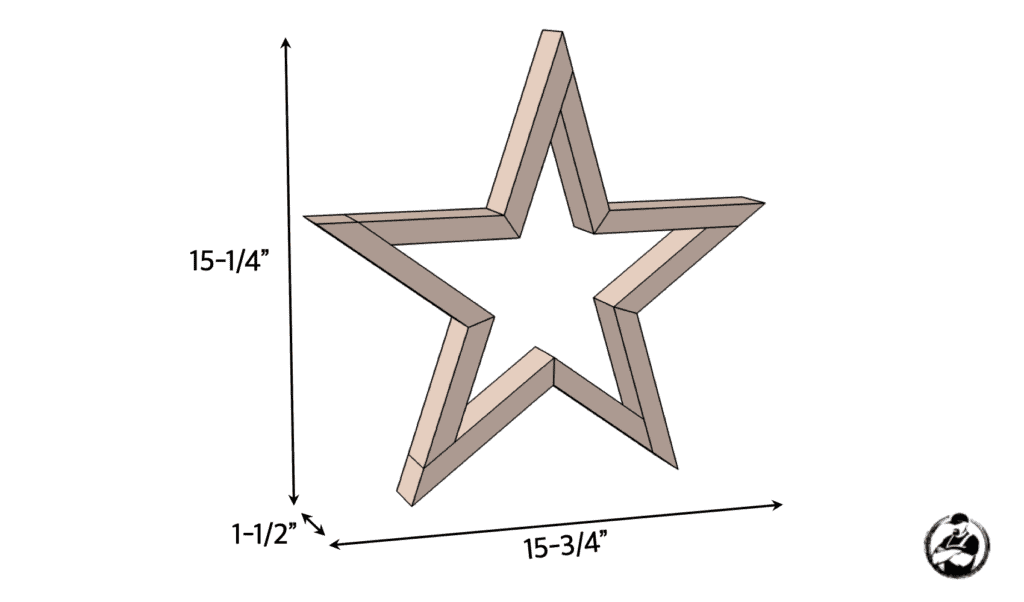
Dimensions
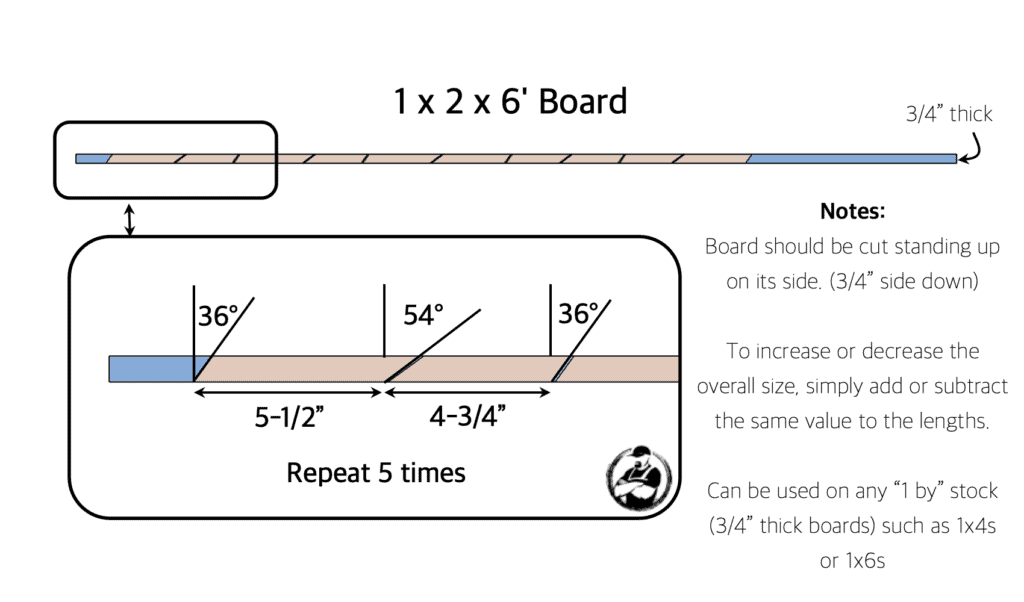
Cut List
Luckily my miter saw goes to 60 degrees but you’re probably wondering how you’re going to make a 54 degree cut if your miter saw only goes to 45 or 50 degrees. Well lucky for you, Jaime shows us how to make a wedge jig here.
Free DIY Wooden Star Plans
Time needed: 30 minutes.
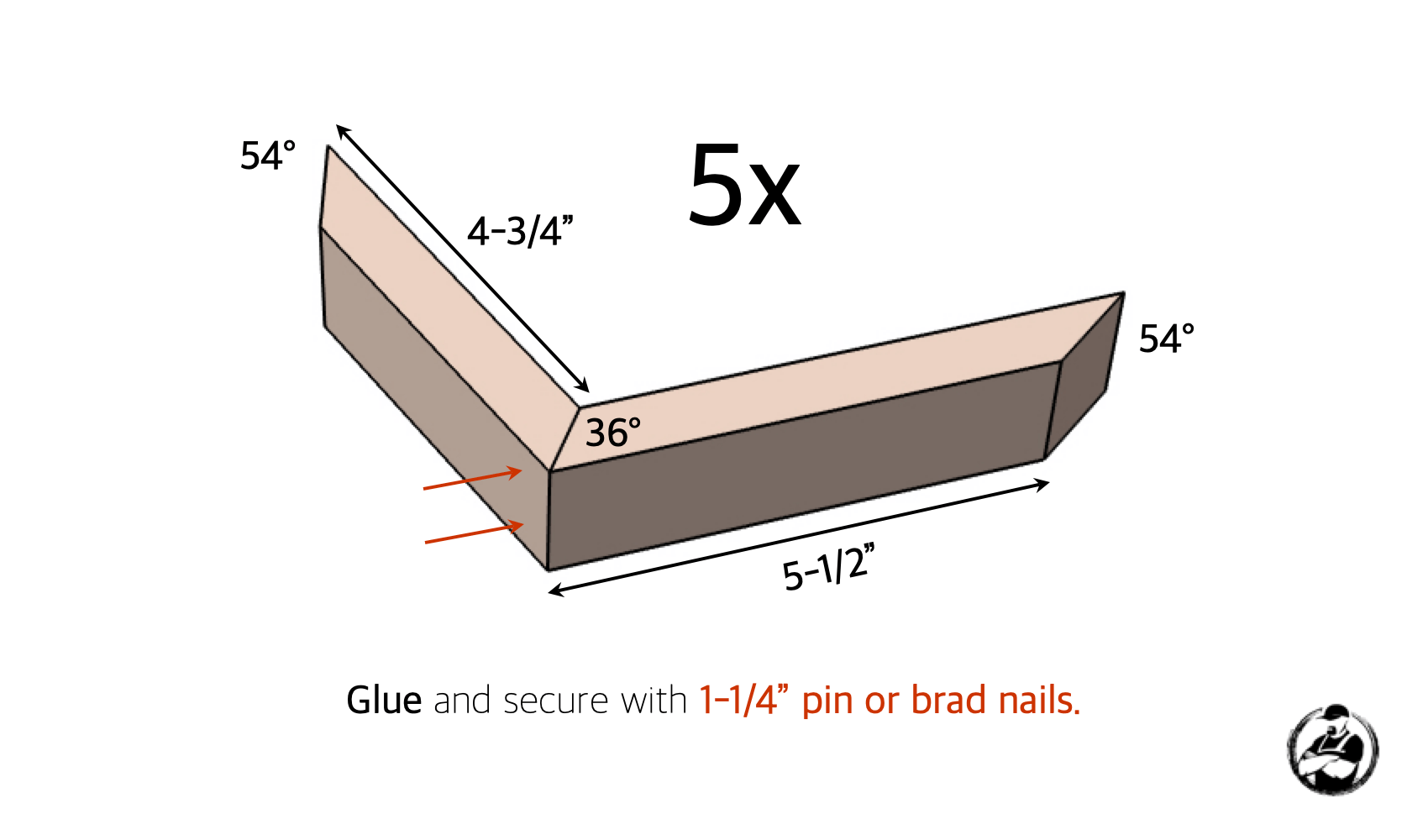
Assemble Inside Corners
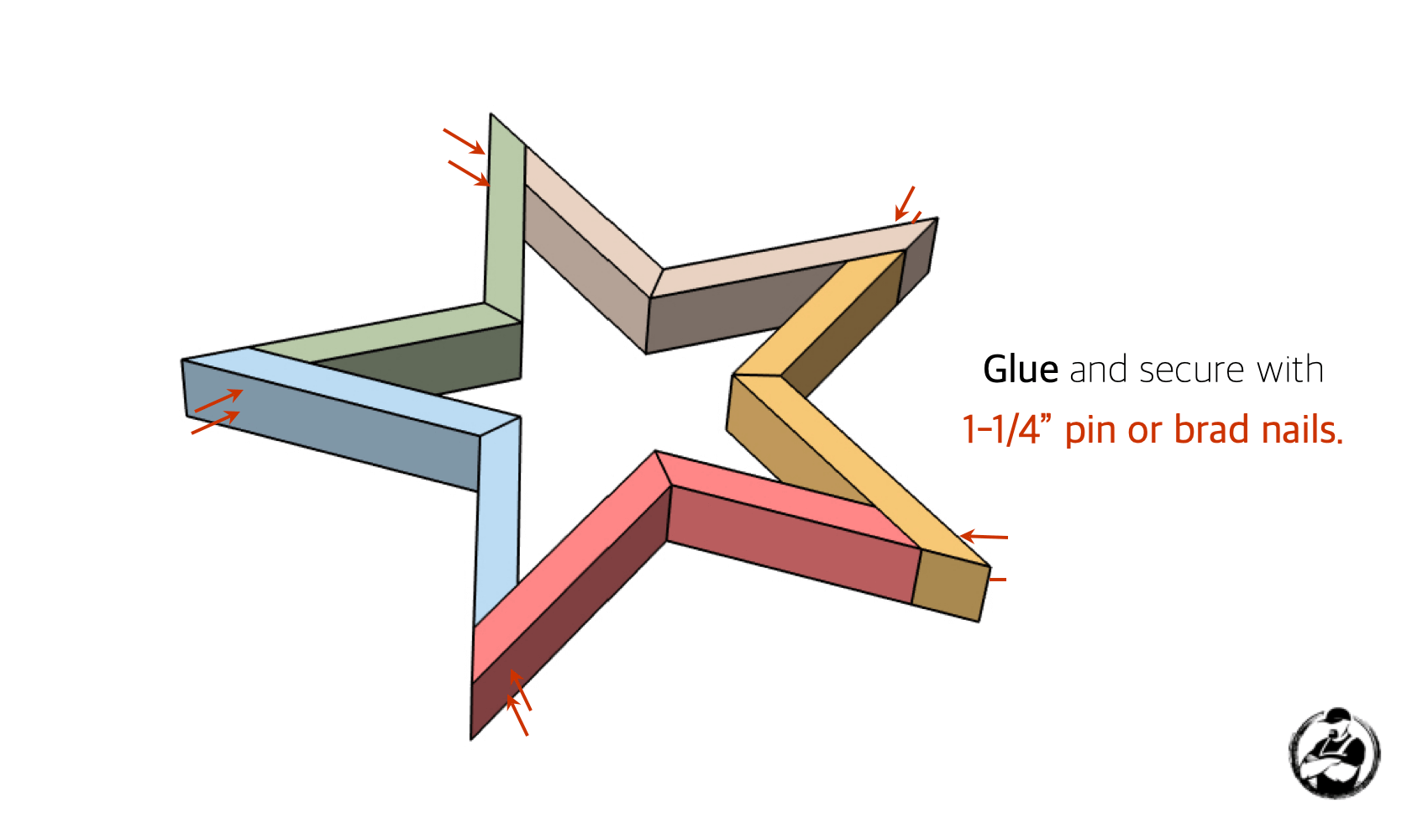
Assemble Outside Corners
Questions? Comments?
As always, if you have any questions don’t hesitate to comment below and especially don’t forget to post pictures of your finished products in the comments! ENJOY!
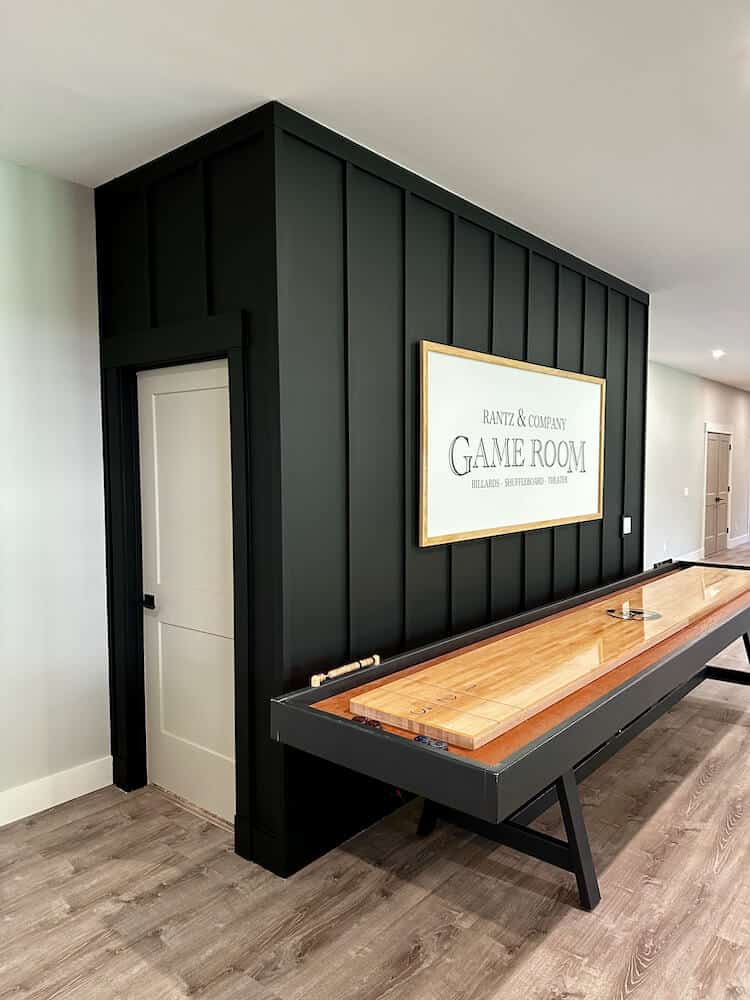
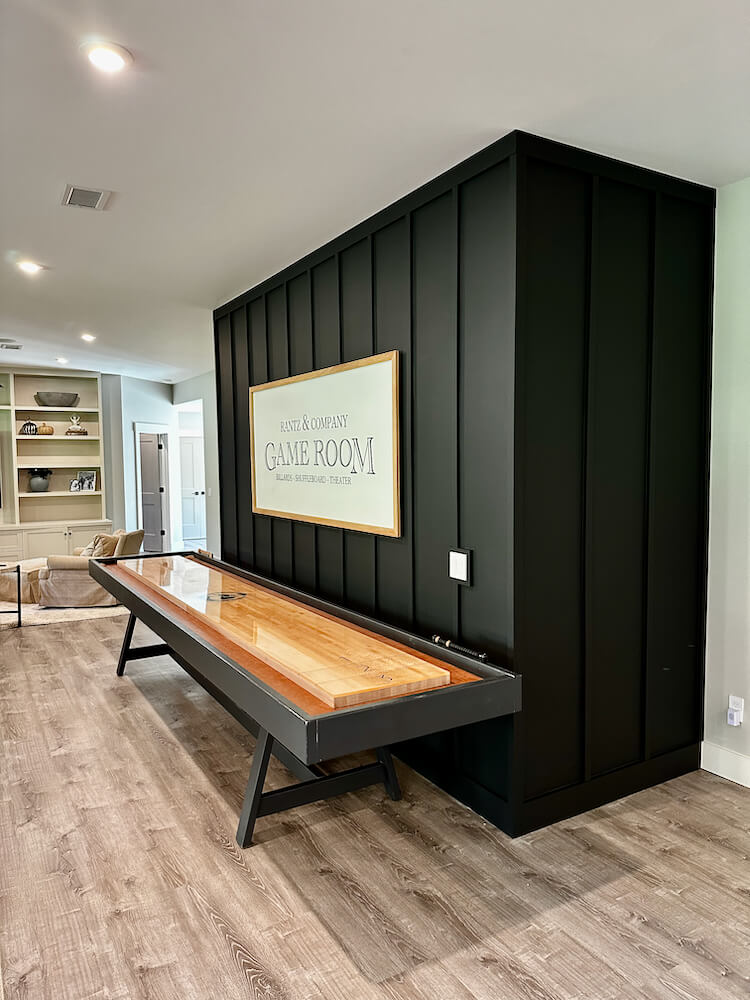
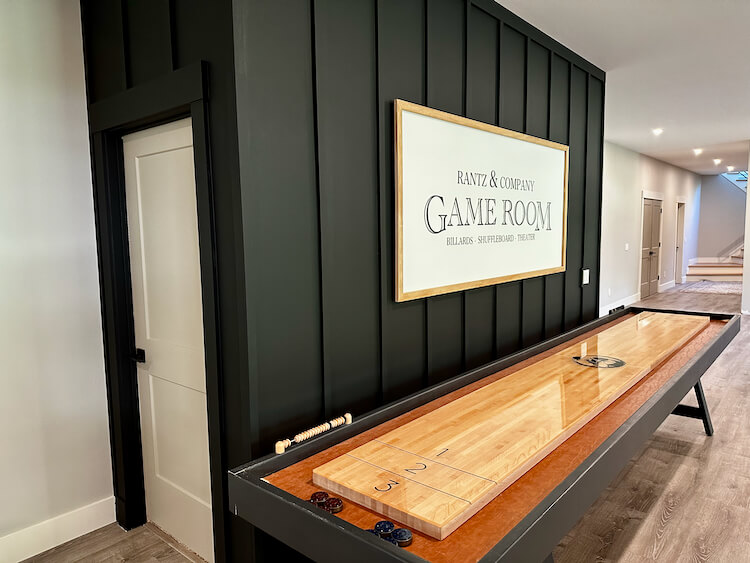
Our basement is definitely coming along. Little by little we have been turning it into the space we’ve always wanted. However the center wall in our basement is a long wall with a bump out which was all the same color. To differentiate the space and add a little pizzazz we decided on a board and batten feature wall. This is an inexpensive and easy way to spruce up a bare wall. Oh and we made a personalized game room sign that really sets it off. Read on for all the details on exactly how it came together.
Project Video
How to Make a Board and Batten Feature Wall
Patching Any Holes
We had a central vacuum port in the middle of our wall that we wanted to move. I was able to remove the port and, with a small piece of drywall, I patched the hole (leaving a 2″ paper boarder on the drywall to act as the tape) and coated it with DAP DryDex Joint Compound. I then sanded it smooth and it was ready for paint.
First Coat of Paint
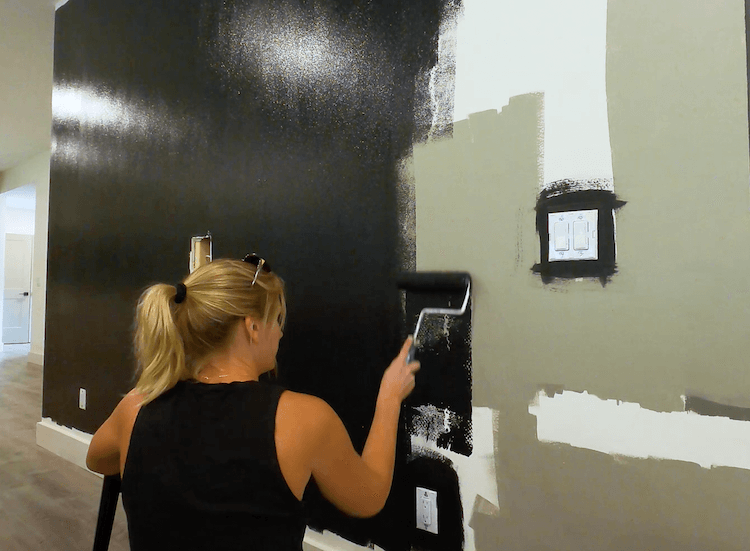
Before installing the battens, we opted to apply the first coat of paint which was a lot quicker with the batten not in the way.
Install Top Batten
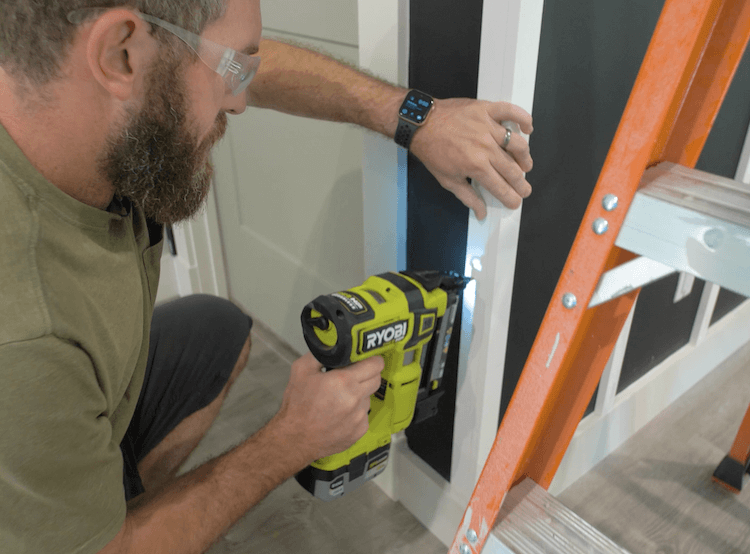
For the top batten, I went with a 1×4. I pre-painted this board and mitered the corners before installing it with 2in brad nails into the studs.
Laying Out the Batten Spacing
Board and batten walls, traditionally have the battens spaced 12″-16″ apart. I like the wider spacing so we went with a spacing as close to 16″ as possible, while still making sure they were equally space. Below is a formula that should help you figure this out.
Feature Wall Length = Wall Length + (Thickness of board(s) used on outside corners)
Number of Battens = (Feature Wall Length / 16″) + 1 (Rounded to nearest whole number) Note: Round down for larger spacings and up for smaller spacing.
Spacing = (Feature Wall Length – Width of 1 Batten) / (Number of Battens – 1)
Mark the inside edge of the first batten, then measure over (using spacing calculated) and mark the far edge of the next batten. Continue to do so over the entire wall.
Installing the Battens
Since these battens are vertical, there will most likely be no stud behind them to nail into. To make sure they stay attached to the wall you will want to glue them with DAP DynaGrip HD Max which will ensure a fast and strong bond between the batten and drywall.
Simply apply a bead of DAP DynaGrip HD Max to the back of the 1×2 batten strip after cutting to length.
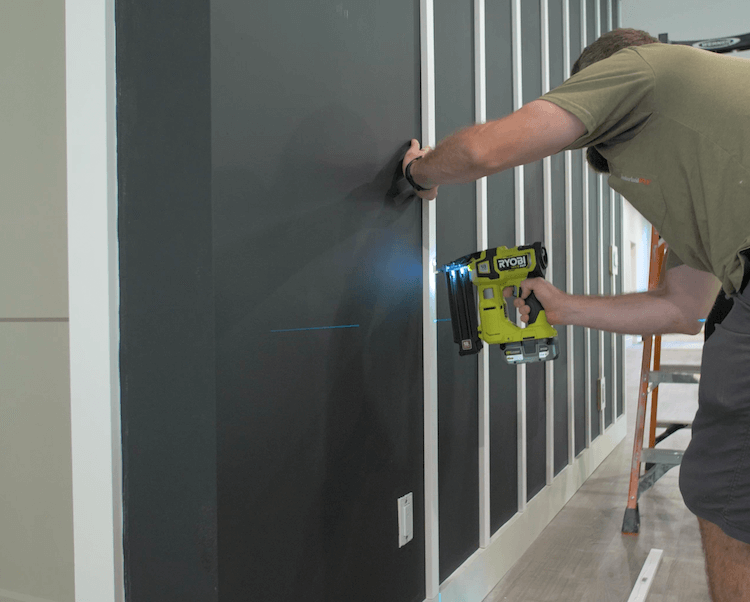
Then use a laser level to ensure plumb and tack to the drywall with 1-1/4″ 18g brad nails.
Installing the Corners
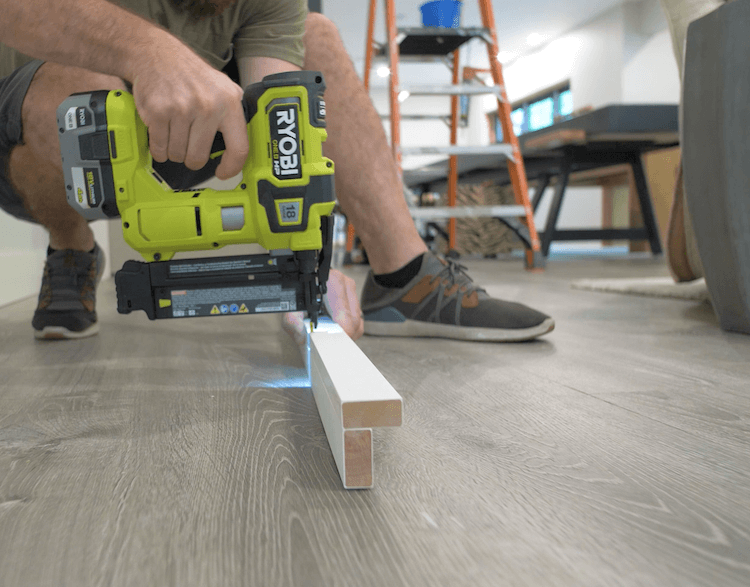
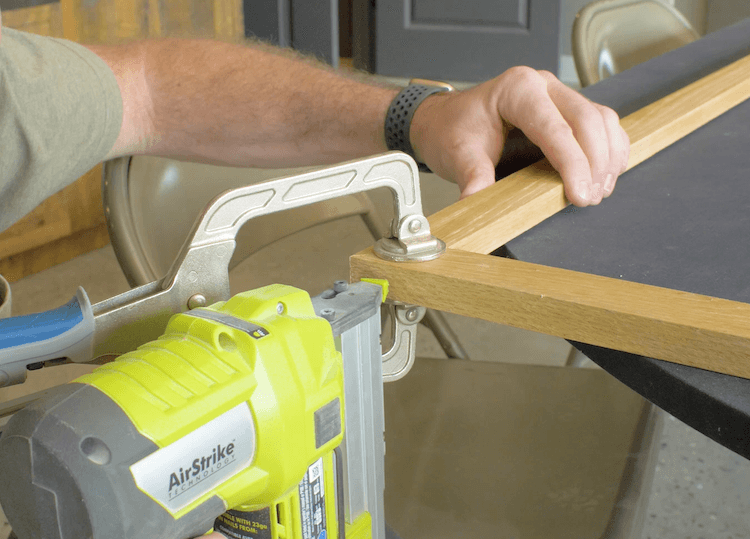
I started by assembling the corners on the ground with 1-1/4″ brad nails to ensure they were nicely aligned.
I then installed the corner assembly with 2″ brad nails into the studs.
Caulk and Fill
To make sure the feature wall looks as good as it can you will want to fill any nail holes with DAP Premium Wood Filler and caulk in the battens and other joints with DAP Alex Flex which is guaranteed to not crack and is paint ready in 30 mins.
Using a putty knife you can apply the wood filler to any nail holes. Then come back and sand smooth when dry.
Apply the caulk to any joints you want to hide and then wet you finger and run it over the joint to give it a nice round over.
Final Coats of Paint
Now apply the final coat of paint (which may actually require 2 coats) by cutting in the battens and rolling in between. We started by not painting the baseboards and door trim but ultimately opted to paint those black as well and were incredibly happy with how it turned out.
Sign Backing
To add a personalized touch to this wall we wanted to make a sign. For this I cut down a 1/4″ MDF sheet to the dimensions I wanted.
Knowing how MDF sucks up paint, I sealed the surface first with a coat of primer.
And then finished up with a few coats of flat white paint.
Vinyl Cut Signage
Using our Cricut vinyl cutter I was able to design the sign and cut it out of black vinyl.
After weeding the excess vinyl and applying the transfer tape, I aligned it on the sign to get it centered and spaced properly. I then taped it in place on the bottom edge before flipping it over and removing the paper backing.
After flipping it back over and pressing the vinyl in place, I then removed the transfer tape to reveal the vinyl signage!
Assembling the Frame
I then moved on to the frame. For this I used red oak 1x2s. I cut a 45 degree miter on each end such that the frame would overlap the sign by about 3/4″.
To take out some of the red in the oak I applied peroxide then a lye mixture before applying a wipe on polyurethane.
I then attached the backing to the frame with staples every 6″ or so.
Installing the Sign
Using a laser level I made sure the sign was centered and level before attaching it to the battens with 2″ brad nails.
We love how this wall turned out. It definitely changes the entire space and really is the perfect game room accent wall. Let me know what you think in the comments and if you try this project, post a picture in the comments to show it off!
Suite à l’installation de la fibre Orange à mon domicile fin décembre, je vous propose ici une découverte de la fibre optique et notamment de la technologie GPON déployée par Orange. Vous découvrirez aussi comment configurer l’Internet, la TV et la téléphonie sans Livebox, en utilisant votre propre routeur, dans mon cas un Mikrotik RB3011 […]

 Connexion