Vue normale

Il y a de nouveaux articles disponibles, cliquez pour rafraîchir la page.
À partir d’avant-hierFlux principal

Windows Server 2025 Core and Docker – A Modern Container Host Architecture

As businesses race toward cloud-native infrastructure and microservices, Windows Server 2025 Core emerges as a lean, powerful platform for hosting Docker containers. With its minimal footprint and robust security posture, Server Core paired with Docker offers a compelling solution for modern application deployment.

Architecture Design: Windows Server Core + Docker

Windows Server 2025 Core is a headless, GUI-less version of Windows Server designed for performance and security. When used as a Docker container host, it provides:

  • Lightweight OS footprint: Reduces attack surface and resource consumption.
  • Hyper-V isolation: Enables secure container execution with kernel-level separation.
  • Support for Nano Server and Server Core images: Ideal for running Windows-based microservices.
  • Integration with Azure Kubernetes Service (AKS): Seamless orchestration in hybrid environments.

Key Components

Component Role in Architecture
Windows Server 2025 Core Host OS with minimal services
Docker Engine Container runtime for managing containers
Hyper-V Optional isolation layer for enhanced security
PowerShell / CLI Tools Management and automation
Windows Admin Center GUI-based remote management

Installation Guide

Setting up Docker on Windows Server 2025 Core is straightforward but requires precision. Here’s a simplified walkthrough:

Windows Server 2025 Datacenter Core running

  1. Install Required Features

Use PowerShell to install Hyper-V and Containers features:

Install-WindowsFeature -Name Hyper-V, Containers -IncludeManagementTools -Restart

  1. Install Docker

Download and install Docker from the official source or use the PowerShell script provided by Microsoft:

Invoke-WebRequest “https://download.docker.com/win/static/stable/x86_64/docker-28.4.0.zip” -OutFile “docker.zip”

Unzip and configure Docker as a service:

at Docker directory to your path

Add the Docker config directory

Set the daemon

Create the Docker Service

net start docker

docker version

Docker Host on Windows Server 2025 Core is Installed 😉

  1. Configure Networking

Ensure proper NAT or transparent networking for container communication.

  1. Pull Base Images

Use Docker CLI to pull Windows container images:

docker pull mcr.microsoft.com/windows/servercore:ltsc2025

  1. Test Deployment

Run a sample Windows Server 2025 core container:

docker run -it mcr.microsoft.com/windows/servercore:ltsc2025

Inside the Windows Server 2025 Core Container on the Docker host.

Best Practices

To maximize reliability, security, and scalability:

  • Use Hyper-V isolation for sensitive workloads.
  • Automate deployments with PowerShell scripts or CI/CD pipelines.
  • Keep base images updated to patch vulnerabilities.
  • Monitor containers using Azure Arc monitoring or Windows Admin Center.
  • Limit container privileges and avoid running as Administrator.
  • Use volume mounts for persistent data storage.

Conclusion: Why It Matters

For developers, Windows Server 2025 Core with Docker offers:

  • Fast iteration cycles with isolated environments.
  • Consistent dev-to-prod workflows using container images.
  • Improved security with minimal OS footprint and Hyper-V isolation.

For businesses, the benefits are even broader:

  • Reduced infrastructure costs via efficient resource usage.
  • Simplified legacy modernization by containerizing Windows apps.
  • Hybrid cloud readiness with Azure integration and Kubernetes support.
  • Scalable architecture for microservices and distributed systems.

Windows Server 2025 Core isn’t just a server OS—it’s a launchpad for modern, secure, and scalable containerized applications. Whether you’re a developer building the next big thing or a business optimizing legacy systems, this combo is worth the investment.

Integrating Azure Arc into the Windows Server 2025 Core + Docker Architecture for Adaptive Cloud

Overview

Microsoft Azure Arc extends Azure’s control plane to your on-premises Windows Server 2025 Core container hosts. By onboarding your Server Core machines as Azure Arc–enabled servers, you gain unified policy enforcement, monitoring, update management, and GitOps-driven configurations—all while keeping workloads close to the data and users.

Architecture Extension

  • Azure Connected Machine Agent
    Installs on Windows Server 2025 Core as a Feature on Demand, creating an Azure resource that represents your physical or virtual machine in the Azure portal.
  • Control Plane Integration
    Onboarded servers appear in Azure Resource Manager (ARM), letting you apply Azure Policy, role-based access control (RBAC), and tag-based cost tracking.
  • Hybrid Monitoring & Telemetry
    Azure Monitor collects logs and metrics from Docker Engine, container workloads, and host-level performance counters—streamlined into your existing Log Analytics workspaces.
  • Update Management & Hotpatching
    Leverage Azure Update Manager to schedule Windows and container image patches. Critical fixes can even be applied via hotpatching on Arc-enabled machines without a reboot.
  • GitOps & Configuration as Code
    Use Azure Arc–enabled Kubernetes to deploy container workloads via Git repositories, or apply Desired State Configuration (DSC) policies to Server Core itself.

Adaptive Cloud Features Enabled

  • Centralized Compliance
    Apply Azure Policies to enforce security baselines across every Docker host, ensuring drift-free configurations.
  • Dynamic Scaling
    Trigger Azure Automation runbooks or Logic Apps when performance thresholds are breached, auto-provisioning new container hosts.
  • Unified Security Posture
    Feed security alerts from Microsoft Defender for Cloud into Azure Sentinel, correlating threats across on-prem and cloud.
  • Hybrid Kubernetes Orchestration
    Extend AKS clusters to run on Arc-connected servers, enabling consistent deployment pipelines whether containers live on Azure or in your datacenter.

More information about Innovate on an Adaptive Cloud here

Integration Walkthrough

  1. Prepare your Server Core host (ensure Hyper-V, Containers, and Azure Arc Feature on Demand are installed).
  2. Install Azure Arc agent via Azure PowerShell
  3. In the Azure portal, navigate to Azure Arc > Servers, and verify your machine is onboarded.
  4. Enable Azure Policy assignments, connect to a Log Analytics workspace, and turn on Update Management.
  5. (Optional) Deploy the Azure Arc GitOps operator for containerized workloads across hybrid clusters.

Visualizing Azure Arc in Your Diagram

Above your existing isometric architecture, add a floating “Azure Cloud Control Plane” layer that includes:

  • ARM with Policy assignments
  • Azure Monitor / Log Analytics
  • Update Manager + Hotpatch service
  • GitOps repo integrations

Draw data and policy-enforcement arrows from this Azure layer down to your Windows Server Core “building,” Docker cube, container workloads, and Hyper-V racks—demonstrating end-to-end adaptive management.

Why It Matters

Integrating Azure Arc transforms your static container host into an adaptive cloud-ready node. You’ll achieve:

  • Consistent governance across on-prem and cloud
  • Automated maintenance with zero-downtime patching
  • Policy-driven security at scale
  • Simplified hybrid Kubernetes and container lifecycle management

With Azure Arc, your Windows Server 2025 Core and Docker container hosts become full citizens of the Azure ecosystem—securing, monitoring, and scaling your workloads wherever they run.

Better Together 🐳


Celebrating 15 Remarkable Years in the Microsoft MVP Community

Dear Community Members, Friends, and Colleagues,

As I mark my 15th anniversary in the Microsoft MVP program, I’m filled with immense gratitude, humility, and pride. What began as a passion for sharing knowledge and building connections has blossomed into a deeply rewarding journey—one shaped by innovation, collaboration, and the extraordinary people who make this community thrive.

Over these 15 years, I’ve had the privilege to learn from brilliant minds, contribute to inspiring projects, and witness the transformative power of technology firsthand. Whether through speaking engagements, blog posts, mentoring, or hands-on technical work, being part of the MVP program has continually deepened my commitment to empowering others and fostering open, inclusive collaboration.

To the community: thank you for challenging, supporting, and celebrating with me. Your curiosity, creativity, and kindness are what keep this ecosystem alive and forward-looking.

To Microsoft: thank you for the honor and trust. The MVP program is a unique platform that amplifies voices, nurtures growth, and builds bridges—not just between developers and users, but between ideas and action.

While this milestone is a moment to reflect, it’s also a reminder that there’s always more to explore, create, and share. I look forward to continuing this journey together—with the same spark, but even greater purpose.

With heartfelt appreciation,
James

Here are some photos with Awesome people that I have met during these years:

Here you see Vijay Tewari in the middle who nominated me for the first time 🙂
Damian Flynn on the left and me on the right are Microsoft MVPs for Virtual Machine Manager (VMM)
at that time in 2011.

Here you see Tina Stenderup-Larsen in the middle, she is amazing! A Great Microsoft Community Program Manager
supporting all the MVPs in the Nordics & Benelux doing an Awesome Job!
On the right is Robert Smit a Great Dutch MVP and friend.

Mister OMS alias Scripting Guy Ed Wilson.

When there is a Microsoft Windows Server event, there is Jeff Woolsey 😉
“The three Musketeers”

Meeting Brad Anderson, he had great lunch breaks interviews in his car
with Awesome people.

The Azure Stack Guys on the 25th MVP Global Summit 😊

Mister PowerShell Jeffrey Snover at the MVP Summit having fun 😂

Scott Guthrie meeting him at the Red Shirt Tour in Amsterdam.

Great to meet Yuri Diogenes in 2018 with his book Azure Security Center.
I know him from the early days with Microsoft Security, like ISA Server 😉

Mister Azure, CTO Mark Russinovich meeting at the MVP Global Summit in Redmond.
a Great Technical Fellow with Awesome Azure Adaptive Cloud Solution Talks!

Mister DevOps himself Donovan Brown in Amsterdam for DevOps Days

My friend Rick Claus Mister MS Ignite.

Mister Azure Corey Sanders at the MVP Summit.

Mister Channel 9, MSIgnite, AI Specialist Seth Juarez
He is a funny guy.

Meeting Scott Hanselman in the Netherlands together with MVP Andre van den Berg.
Scott is Awesome in developer innovations and technologies.
Following Azure Friday from the beginning.

Windows Insider friends for ever meeting Scott Hanselman.
With on the left MVP Erik Moreau.

Windows Insiders for Ever 💙
Here together with Dona Sarkar here in the Netherlands

Windows Insider Friends having fun with Ugly Sweater meeting.
On the right my friend Maison da Silva and on the upper right Erik Moreau and Andre van den Berg.
Friends for Life 💙

Microsoft Global MVP 15 Years Award disc is in the House 🫶
on Monday the 14th of July 2025.

Thank you All 💗

Happy Anniversary Day 50 years of Microsoft Innovation

50 years of Microsoft

A Legacy of Innovation and Transformation

Half a century ago, on April 4th, 1975, two young visionaries, Bill Gates and Paul Allen, co-founded Microsoft with a bold ambition: to make computing accessible and essential for everyone. What began as a small software company has grown into a global technology leader, continuously transforming industries and empowering billions of lives. As we celebrate Microsoft’s 50-year journey, let’s explore its milestones, innovations, and impact, including its contributions to datacenters, Windows Server, Hyper-V, Azure, and the leadership of its CEOs.

The Early Years: Coding the Future

Microsoft’s first big breakthrough came with the creation of an operating system for the fledgling personal computer market. In 1980, the company introduced MS-DOS, laying the groundwork for the revolutionary Windows operating system, launched in 1985. This graphical interface transformed computing, making it accessible to both businesses and individuals.

Guiding Microsoft Through Its Evolution: The CEOs Who Shaped the Company

Microsoft’s trajectory has been shaped by its visionary leadership. From the founders to the present, each CEO has left an indelible mark:

  1. Bill Gates (1975–2000): As co-founder and first CEO, Gates spearheaded the company’s initial growth, launching pivotal products like MS-DOS, Windows, and Office. His focus on innovation and accessibility built the foundation of Microsoft’s success.
  2. Steve Ballmer (2000–2014): During his tenure, Ballmer led Microsoft through massive expansion, particularly in enterprise solutions and cloud computing. He introduced Windows Server and laid the groundwork for services like Azure. Ballmer’s energy and passion defined his leadership style and kept Microsoft competitive in a rapidly changing market.
  3. Satya Nadella (2014–Present): Nadella ushered in a cloud-first, AI-driven era, transforming Microsoft’s culture and business model. His emphasis on inclusivity, empathy, and sustainability revitalized the company. Under his leadership, Azure became one of the world’s leading cloud platforms, and Microsoft made transformative acquisitions like LinkedIn, GitHub, and Activision Blizzard.

Lake Bill on Redmond Campus

Redefining Enterprise Technology: Datacenters, Windows Server, and Virtualization

As businesses increasingly relied on technology, Microsoft expanded its offerings to support enterprise needs. Windows Server, introduced in 1993, became a cornerstone for server management and networking. It evolved over the decades, incorporating features such as Active Directory, high availability, and security enhancements.

Microsoft played a pivotal role in virtualization with Hyper-V, launched in 2008. Hyper-V allowed organizations to maximize resource efficiency and reduce costs by running multiple virtual machines on a single physical server. Modern datacenters powered by Microsoft’s hardware and software solutions now form the backbone of its cloud services.

Embracing the Cloud: The Azure Revolution

Microsoft’s Azure cloud platform, launched in 2010, redefined computing. It enabled organizations to access scalable infrastructure, deploy applications globally, and harness artificial intelligence with ease. Azure spans over 60 regions worldwide, making it one of the most comprehensive cloud platforms. Its ecosystem includes hybrid cloud solutions, advanced analytics, and IoT technologies.

Gaming, Devices, and Consumer Innovation

Microsoft entered the gaming industry with the Xbox in 2001, creating a thriving gaming ecosystem. Beyond gaming, the company innovated with devices like the Surface lineup, combining sleek design with productivity. Its integration of hardware and software demonstrated Microsoft’s versatility.

Shaping the Future: AI, Sustainability, and Datacenters

Microsoft continues to lead in artificial intelligence with tools like Microsoft Copilot. Its pledge to be carbon-negative by 2030 highlights environmental responsibility, with sustainable datacenter operations playing a central role.

Conclusion: A Legacy Built to Inspire

Microsoft’s 50-year journey is a testament to the power of innovation and visionary leadership. From Bill Gates to Steve Ballmer to Satya Nadella, each CEO has steered the company to new heights. With contributions ranging from datacenters and Windows Server to Hyper-V and Azure, Microsoft’s impact has been profound. As the company looks ahead, it remains dedicated to empowering people and organizations to achieve more, ensuring the next 50 years are as groundbreaking as the last.

Here’s to Microsoft—a company built to inspire and shape the future.

at Building 92 of the Microsoft Campus in Redmond.


Revolutionizing Hybrid Cloud Storage with Azure Container Storage Enabled by Azure Arc

In the dynamic world of cloud computing, Microsoft continues to innovate with solutions that empower organizations to manage hybrid and multi-cloud environments effectively. One such groundbreaking solution is Azure Container Storage enabled by Azure Arc. This technology is designed to simplify and enhance the management of persistent storage for Kubernetes clusters, providing a unified and adaptive approach to cloud storage.

What is Azure Container Storage Enabled by Azure Arc?

Azure Container Storage enabled by Azure Arc is a first-party storage system designed for Arc-connected Kubernetes clusters. It serves as a native persistent storage solution, offering high availability, fault tolerance, and seamless data synchronization to Azure Blob Storage. This system is crucial for making Kubernetes clusters stateful, especially for Azure IoT Operations and other Arc services.

Key Features and Benefits

  1. High Availability and Fault Tolerance: When configured as a 3-node cluster, Azure Container Storage enabled by Azure Arc replicates data between nodes (triplication) to ensure high availability and tolerance to single node failures.
  2. Data Synchronization to Azure: Data written to volumes is automatically tiered to Azure Blob Storage, including block blob, ADLSgen-2, or OneLake. This ensures that data is securely stored and easily accessible in the cloud.
  3. Low Latency Operations: Arc services, such as Azure IoT Operations, can expect low latency for read and write operations, making it ideal for real-time applications.
  4. Simple Connection: Customers can easily connect to an Azure Container Storage enabled by Azure Arc volume using a CSI driver to start making Persistent Volume Claims against their storage.
  5. Flexibility in Deployment: Azure Container Storage enabled by Azure Arc can be deployed as part of Azure IoT Operations or as a standalone solution, providing flexibility to meet various deployment needs.
  6. Platform Neutrality: This storage system can run on any Arc Kubernetes supported platform, including Ubuntu + CNCF K3s/K8s, Windows IoT + AKS-EE, and Azure Stack HCI + AKS-HCI and Azure Local.

Microsoft Azure Local solution


Azure Container Storage Offerings

Azure Container Storage enabled by Azure Arc offers two main storage options:

  1. Cache Volumes: The original offering, providing a reliable and fault-tolerant file system for Arc-connected Kubernetes clusters.
  2. Edge Volumes: The newest offering, which includes Local Shared Edge Volumes and Cloud Ingest Edge Volumes. Local Shared Edge Volumes provide highly available, failover-capable storage local to your Kubernetes cluster, while Cloud Ingest Edge Volumes facilitate limitless data ingestion from edge to Blob storage.

Use Cases and Applications

Azure Container Storage enabled by Azure Arc is particularly beneficial for organizations with hybrid and multi-cloud environments. It supports various use cases, including:

  • IoT Applications: Ensuring data integrity and synchronization in disconnected environments, making it ideal for IoT operations.
  • Edge Computing: Providing local storage for scratch space, temporary storage, and locally persistent data unsuitable for cloud destinations.
  • Data Ingestion: Facilitating seamless data transfer from edge to cloud, optimizing local resource utilization and reducing storage requirements.

Conclusion

Azure Container Storage enabled by Azure Arc represents the future of hybrid cloud storage, offering seamless onboarding, unified management, and adaptive capabilities. By leveraging this technology, organizations can overcome the challenges of hybrid and multi-cloud environments, streamline operations, and drive innovation.

Whether you’re just starting your cloud journey or looking to optimize your existing infrastructure, Azure Container Storage enabled by Azure Arc provides the tools and guidance you need to succeed. Embrace the power of this transformative solution and unlock new possibilities for your organization.

Jumpstart Drops is a good begin in your test environment, before you begin in production. Here you find a Jump start drop about “Create an Azure Container Storage enabled by Azure Arc Edge Volumes with CloudSync” by Anthony Joint.

More information:

Introducing Azure Local by Cosmos Darwin

Microsoft Adaptive Cloud

Announcement! Edge Storage Accelerator YouTube video. 

What is Microsoft Azure Arc Services?

A little Christmas Story

Once upon a time, in a world where technology and holiday cheer intertwined, there was a bustling community of developers eagerly awaiting the latest updates from the Microsoft Windows 11 and Windows Server Insider programs. As the festive season approached, the air was filled with excitement and anticipation.

In the heart of this community were the Microsoft MVPs (Most Valuable Professionals) and Docker Captains, who were known for their expertise and passion for technology. They decided to come together to create something truly magical for developers around the world.

One snowy evening, as the MVPs and Docker Captains gathered around a virtual fireplace, they began to brainstorm ideas. “What if we could combine the power of Windows 11, Windows Server, and Docker Containers to create a seamless development experience?” suggested one MVP, their eyes twinkling with excitement.

The idea quickly gained momentum, and soon, the group was hard at work. They envisioned a world where developers could effortlessly build, test, and deploy applications using the latest features of Windows 11 and Windows Server, all within the flexible and scalable environment of Docker Containers.

With the help of the Insider programs, they gained early access to cutting-edge features and updates. The MVPs and Docker Captains worked tirelessly, sharing their knowledge and expertise to create a series of tutorials, guides, and sample projects. These resources were designed to help developers harness the full potential of Windows 11, Windows Server, and Docker Containers.

As the holiday season progressed, the community began to see the fruits of their labor. Developers from all corners of the globe started to adopt the new tools and techniques, marveling at the ease and efficiency they brought to their workflows. The combination of Windows 11’s sleek interface, Windows Server’s robust capabilities, and Docker Containers’ flexibility created a harmonious symphony of technology.

To celebrate their success, the MVPs and Docker Captains organized a virtual holiday party. Developers joined from far and wide, sharing stories of their experiences and the innovative projects they had created. The virtual room was filled with laughter, camaraderie, and a shared sense of accomplishment.

As the night drew to a close, one of the Docker Captains raised a toast. “Here’s to the power of collaboration, the spirit of innovation, and the joy of the holiday season. May we continue to push the boundaries of technology and inspire developers everywhere.”

And so, the story of the Microsoft Windows 11 and Windows Server Insider Christmas, made possible by the dedication and expertise of the MVPs and Docker Captains, became a cherished tale in the developer community. It was a reminder that, with passion and teamwork, even the most ambitious dreams could come true.

Happy holidays, and may your coding adventures be merry and bright! 🎄💻🐳

Unlocking the Future of Hybrid Cloud Management with Azure Arc, Windows Admin Center, and Azure Copilot

Microsoft Azure Arc enabled Windows Server 2025 Insider Preview in Windows Admin Center

In the ever-evolving landscape of IT infrastructure, the need for seamless integration and management across on-premises, edge, and cloud environments has never been more critical. Enter Azure Arc-enabled servers, Windows Admin Center, and Azure Copilot—three powerful tools that together redefine hybrid cloud management.

Azure Arc: Bridging the Gap

Azure Arc is a game-changer for organizations looking to extend Azure management capabilities to any infrastructure. Whether your servers are on-premises, at the edge, or in another cloud, Azure Arc enables you to manage them through a single pane of glass. This unified approach simplifies operations, enhances security, and ensures compliance across diverse environments.

With Azure Arc, you can:

  • Deploy and manage Kubernetes clusters anywhere.
  • Apply Azure policies consistently across all your resources.
  • Leverage Azure services like Azure Monitor and Azure Security Center for comprehensive monitoring and security.

Windows Admin Center: Simplified Server Management

Windows Admin Center (WAC) is a browser-based management tool that brings simplicity and efficiency to server management. Integrated with Azure Arc, WAC provides a centralized platform to manage your Windows Servers, whether they are on-premises or in the cloud.

Key features of Windows Admin Center include:

  • Intuitive Dashboard: A user-friendly interface that provides a holistic view of your server environment.
  • Streamlined Management: Tools for managing server roles, storage, networking, and more.
  • Azure Integration: Seamless connectivity with Azure services, enabling hybrid scenarios like Azure Backup and Azure Site Recovery.

Azure Copilot: AI-Powered Assistance

Azure Copilot is the latest addition to the Azure ecosystem, bringing AI-powered assistance to your fingertips. Integrated with both Azure Arc and Windows Admin Center, Azure Copilot leverages machine learning to provide insights, recommendations, and automation, making your IT operations smarter and more efficient.


With Azure Copilot, you can:

  • Automate Routine Tasks: Reduce manual intervention with intelligent automation.
  • Gain Actionable Insights: Use predictive analytics to anticipate issues before they occur.
  • Enhance Security: Receive real-time security recommendations and threat detection.


The Power of Integration

The true strength of these tools lies in their integration. Azure Arc extends Azure’s reach to any infrastructure, Windows Admin Center simplifies server management, and Azure Copilot adds a layer of intelligence and automation. Together, they create a robust hybrid cloud management solution that empowers IT professionals to manage complex environments with ease.
This is called Microsoft Adaptive Cloud

Imagine a scenario where you can deploy a Kubernetes cluster on-premises, manage it through Windows Admin Center, and use Azure Copilot to automate updates and monitor performance—all from a single interface. This level of integration not only enhances operational efficiency but also ensures that your infrastructure is secure, compliant, and ready for the future.


Conclusion

As organizations continue to navigate the complexities of hybrid cloud environments, the combination of Azure Arc, Windows Admin Center, and Azure Copilot offers a comprehensive solution that simplifies management, enhances security, and drives innovation. Embrace the future of IT infrastructure management with these powerful tools and unlock new possibilities for your organization.

Ready to transform your hybrid cloud strategy? Dive into the world of Azure Arc, Windows Admin Center, and Azure Copilot today and experience the future of IT management.

For more information on these tools and how they can benefit your organization, check out the latest updates from Microsoft Docs:

Microsoft Azure Arc documentation

Microsoft Azure Copilot documentation

Microsoft Azure Windows Admin Center for Arc Enabled Servers

My Highlights Day 3 of Microsoft Ignite 2024

Mark Russinovich and Scott Hanselman on Stage talking about Copilot, ChatGPT and AI

Scott and Mark learn responsible AI

Always check the output of AI 😉

Microsoft Azure Local 

NEW Microsoft Introducing disconnected Operations (Preview) ✅

Azure Local with disconnected Operations
Awesome!

NSG with Azure Local ✅🚀

Security in Azure Local video


Defender for Cloud

Get Started Today 🚀

Azure Linux 3.0 on AKS kubernetes in Preview

QuickStart

AKS Automatic
Dynamic System Node pool in Preview

More Buit-in policies for AKS

Auto-Instrumentation with Application Insights
Preview in January 2025

Enhanced Risk & Attack Path Analysis for Containers

Microsoft Azure Container Registry – Image Auto Patching in Private Preview
Security on Vulnerabilities

Network Isolated Cluster in Public Preview
Here you find Best practices for cluster isolation in Azure Kubernetes Service (AKS)

Microsoft Container Vulnerabilities Management

Container Vulnerabilities Assessment throughout the software development lifecycle.

Defender for Cloud Container Security
Continuously reduce risks.

Attack path and remediation on your AKS Kubernetes Cluster Inside overview

Container Security posture from Code to runtime is important! ✅

Microsoft Azure Kubernetes Fleet Manager Auto-Upgrade

Microsoft AKS Static Egress Gateway for Pod-level Access Control.

Block pod access to the Azure Instance Metadata Service (IMDS) endpoint (preview)

Trusted launch for Azure Kubernetes Service (AKS)

Seccomp Default Public Preview

Node Auto Provisioning GA January 2025

Comprehensive Security Controls overview

Experience Security Copilot Today ✅🚀

My Conclusion

Always start small with New innovative features like Azure Copilot or making your Adaptive Cloud first in a test environment.
Do your own experiences, testing and make your Secure architecture designs for your production. Keep it simple because it can be quick complex with a lot of dependencies. Microsoft works hard to make your life more easy in this changing IT landscape 👍
I like to thank all the people who supported the Microsoft Ignite 2024 event, it was Awesome with a lot of Great News. 🚀

Here you find the Microsoft Ignite 2024 Book of News.


My highlights Day 2 of Microsoft Ignite 2024

Microsoft Azure Adaptive Cloud approach enabled by Azure Arc.

Adaptive Cloud approach Key Services and Products.

Operate everywhere with AI-enhanced management and security

AI-enhanced Central Management & Security

Get Started with Azure Arc Jumpstart here

Welcome to the heart of our mission at Azure Arc Jumpstart, where we strive to transform your learning experience into a smooth and empowering journey. Our commitment is rooted in the principles that drive us forward:

  1. Enabling immediate engagement: Arc Jumpstart is designed to offer a seamless “zero to hero” experience. We understand the value of your time, and our goal is to enable you to dive right into Azure Arc, eliminating barriers and complexities.

  2. Comprehensive guidance: We provide more than just guides; we offer comprehensive, step-by-step instructions tailored for various independent Azure Arc scenarios. Our content is meticulously detailed, incorporating extensive automation, vivid screenshots, and insightful code samples. This ensures that your learning journey is not just informative but also visually enriching and deeply engaging.

  3. Unparalleled user experience: Our dedication lies in delivering a rich and immersive experience. We go beyond the basics, curating a user-centric environment that resonates with both beginners and seasoned professionals. Whether you’re setting up your environment on-premises or in the cloud, our guides empower you to focus on Azure Arc’s core values without being bogged down by technical intricacies.

  4. Embracing platform flexibility: We recognize the diversity of your infrastructure, and our mission is to provide a platform-agnostic approach. Arc Jumpstart accommodates your infrastructure, whether it resides on-premises or in the cloud. Our focus is to ensure that regardless of your setup, you can harness the true potential of the Azure Arc platform effortlessly.

Investments to further the Adaptive Cloud Approach 🚀

Introducing Microsoft Azure Local enabled by Azure Arc

Scott Hanselman about Visual Studio and Copilot

More AI development in Visual Studio or VSCode

Microsoft Windows 365 Link

This is Awesome, my next question is:
How fast will this solution be on Mobile?

Windows Hotpatch will be Available Spring 2025
for Windows 11 and Windows 365.

Windows Resilient Security Platform

Quick Machine Recovery in Insider program early 2025.

Microsoft working together with Cybersecurity & Infrastructure Security Agency

Smart App Control only Verified apps are allowed.

Windows Hello for Business Update with support for passkey.

Administrator Protection.

Personal Data Encryption to Windows Enterprise
Only decrypted via Windows Hello

Microsoft 365 in File Explorer

Windows Search is Cool 😎
Coming in 2025

My Conclusion

Make your own test environment and become a Windows Insider to be one of the first to test these Awesome New features!
You can make this of course in Microsoft Azure Cloud or in your own Azure Local environment 🚀
There are so much possibilities, to keep yourself up-to-date with this changing IT landscape.


Day 2 of Microsoft Ignite 2024 with Azure CTO Mark Russinovich

Mark Russinovich Microsoft Azure CTO Starting and Running 10.000 Containers in Azure in just 90 seconds!
That is unbelievable 😎

Here you find my screenshots and links of the Microsoft Ignite 2024 session with Mark Russinovich.
First a quick introduction about Microsoft Azure Boost in this video.

Microsoft Azure Boost more IOPS and Throughput

Before and After Azure Boost Local Storage improvements.

Can you believe it, these are no typo’s 6.6 M IOPS ! 😎

Azure Boost Networking

Network driver Update in Azure Boost.

Software Defined Networking (SDN) Today

SDN Accelerating offloads with DPU


Secure 1.6 Tbps+ to storage over WAN
Can you believe it 😎

Microsoft announcing Azure Container Instances NGroups (Preview)

Cloud Native Apps are more than just Kubernetes

Radius in the Cloud

New Azure Container Solutions

Security Trusted Execution Environments (TEE)

When you missed Mark Russinovich at Ignite 2024 session, you can watch it on-demand here

My Conclusion

Not only with Microsoft Copilot, Azure AI or Open-AI is the IT landscape changing, but the Adaptive Cloud is evolving very quick and hardware, Software Defined is getting faster and faster but also scaling in Datacenters.

This Jeremy Winter Talking about Power-efficient Datacenter Infrastructure.

Power-efficient datacenter infrastructure is very important for Microsoft, and what I see is More Software solutions with less hardware.
Software defined and AI solutions are changing the IT Cloud Landscape also in a Hybrid way with On-premises Datacenters.
10 years ago IT workloads was 80% on-premises datacenters and 20% in the Cloud, Today this is Changed to maybe 30% on-premises and 70% in the Cloud of companies IT solutions.  Here you can Learn more at Microsoft Learn Ignite 2024

Microsoft Azure Copilot Preview in the Cloud to Support you

Azure Copilot

Microsoft Copilot in Azure (preview) is an AI-powered tool to help you do more with Azure. With Microsoft Copilot in Azure, you can gain new insights, discover more benefits of the cloud, and orchestrate across both cloud and edge. Copilot leverages Large Language Models (LLMs), the Azure control plane, and insights about your Azure environment to help you work more efficiently.

You can try Copilot now in the Microsoft Azure portal in Preview !

Click on Copilot and click on Next.

Give your feedback.

Click on Try Copilot.

Now you can use Azure Copilot Preview.

for example, show me all running Virtual Machines.

Here you find the Microsoft Azure Copilot capabilities

Prompt engineering is the process of designing prompts that elicit the best and most accurate responses from large language models (LLMs) like Microsoft Copilot in Azure (preview). As these models become more sophisticated, understanding how to create effective prompts becomes even more essential. Read here more about Write effective prompts for Microsoft Copilot in Azure

Conclusion

Microsoft Azure Copilot preview can be very handy to support you with deployments, troubleshooting in Azure Cloud services and
Hybrid with Azure Arc. Time to market and going live in production can be quicker because you don’t have to search yourself for the right command or scripts. Copilot will be smarter and more efficient, and you can learn from Copilot approaches. You are still in control because you have to check it if Copilot advise is the right thing to do. Try it yourself and experience the Azure Copilot Preview version 😉

Join the Azure Copilot and Microsoft Security Copilot LinkedIn Community Group


Running CBL-Mariner 2.0 Azure Linux on Hyper-V for Docker Container Host and Azure CLI

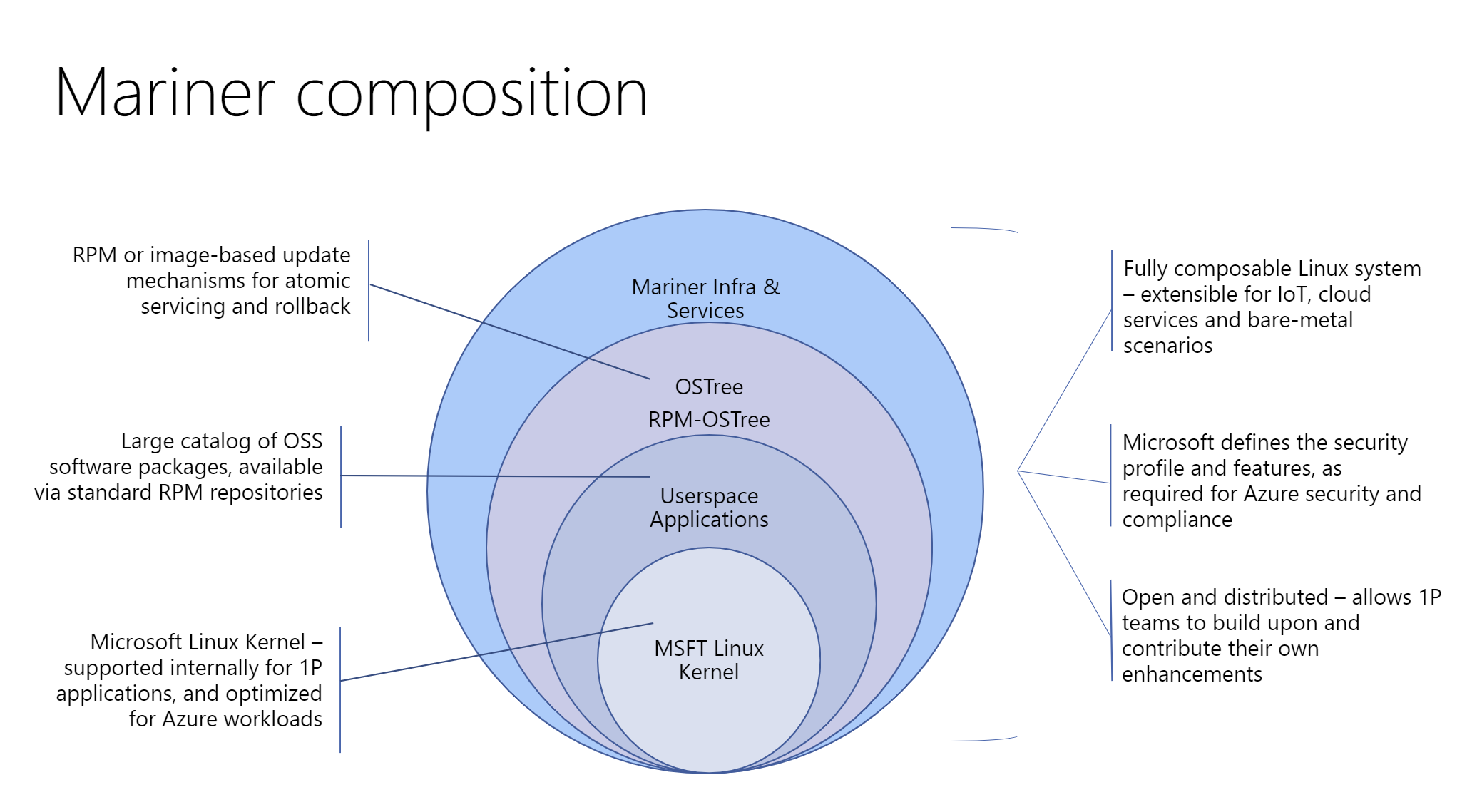
CBL-Mariner Linux is a lightweight operating system, containing only the packages needed for a cloud environment. CBL-Mariner can be customized through custom packages and tools, to fit the requirements of your application. CBL-Mariner undergoes Azure validation tests, is compatible with Azure agents, and is built and tested by the Azure Edge & Platform to power various use cases, ranging from Azure services to powering IoT infrastructure. CBL-Mariner is the internally recommended Linux distribution for use with Microsoft cloud services and related products.

In the following steps we are going to install CBL-Mariner 2.0 on Hyper-V as a virtual Docker Container Host.
First you have to download CBL-Mariner 2.0 (Azure Linux) ISO here

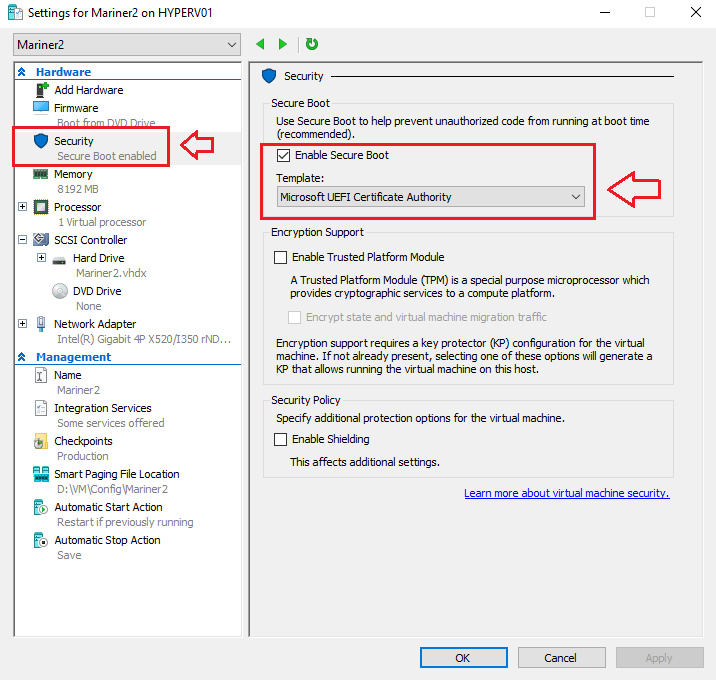
Enable Secure Boot Template: Microsoft UEFI Certificate Authority

When you have made your Virtual Machine on Microsoft Hyper-V, you have to change the Security Boot Template from Microsoft Windows to Microsoft UEFI Certificate Authority and then you can boot from the ISO.

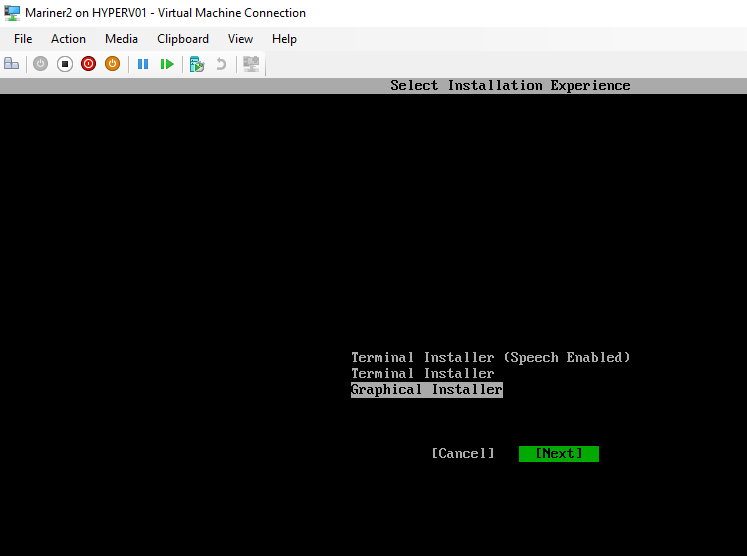
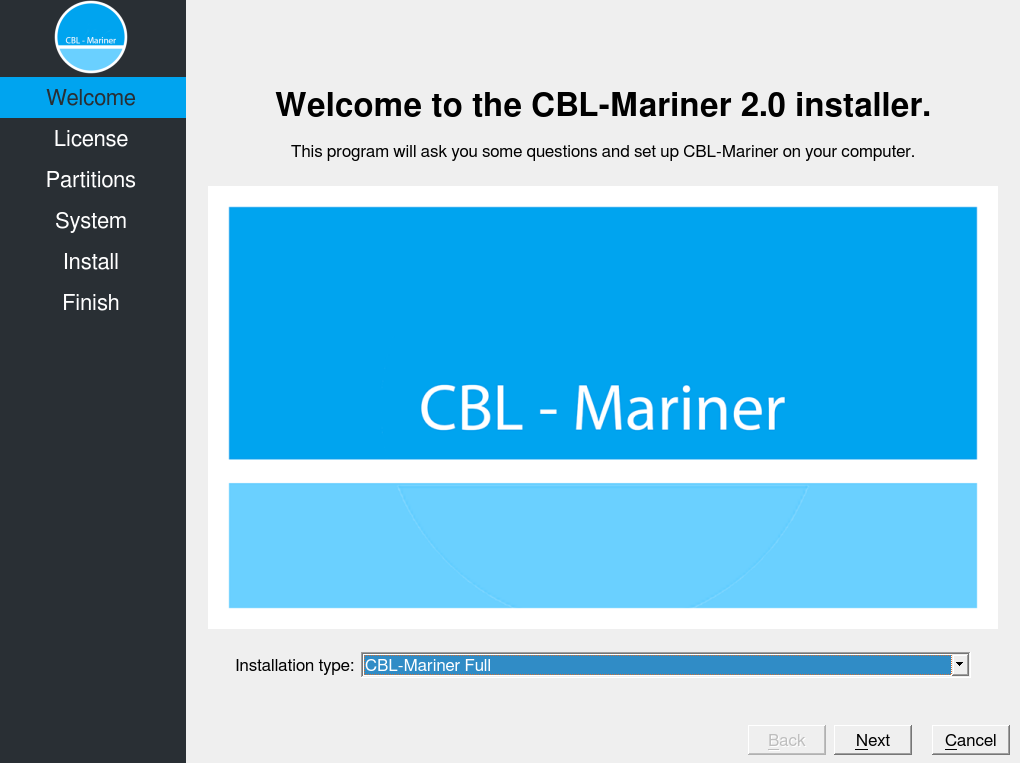
Select the Installation Experience
I used the Graphical Installer,
Select Next.

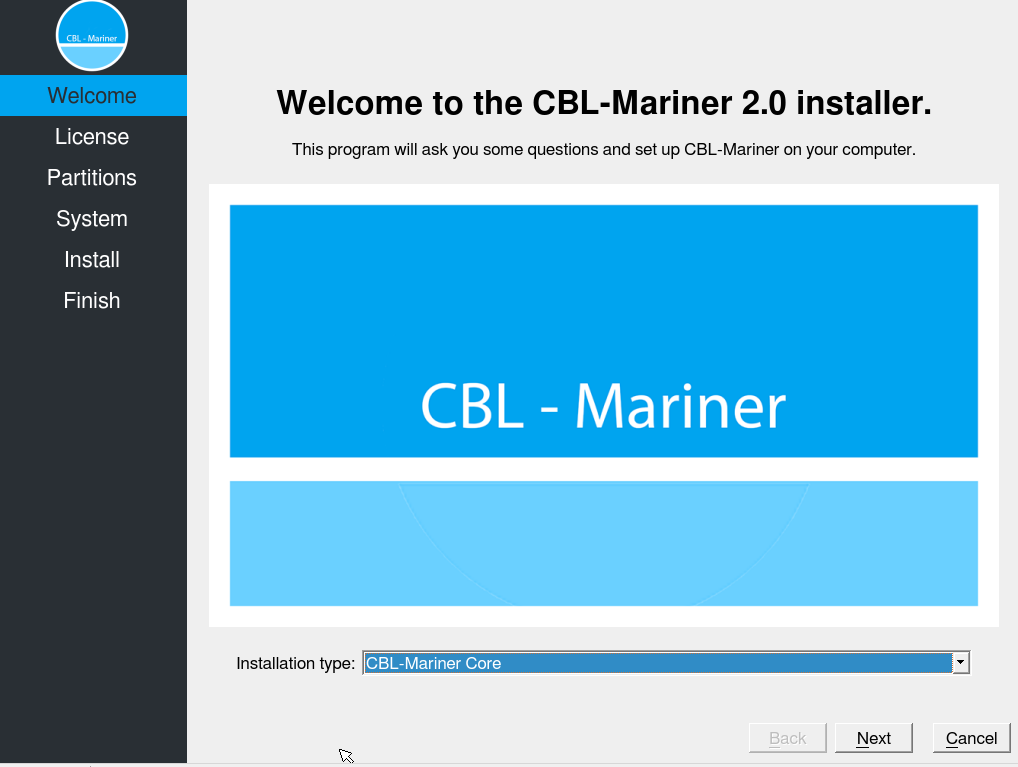
Default is the installation type: CBL-Mariner Core

I selected Installation type: CBL-Mariner Full

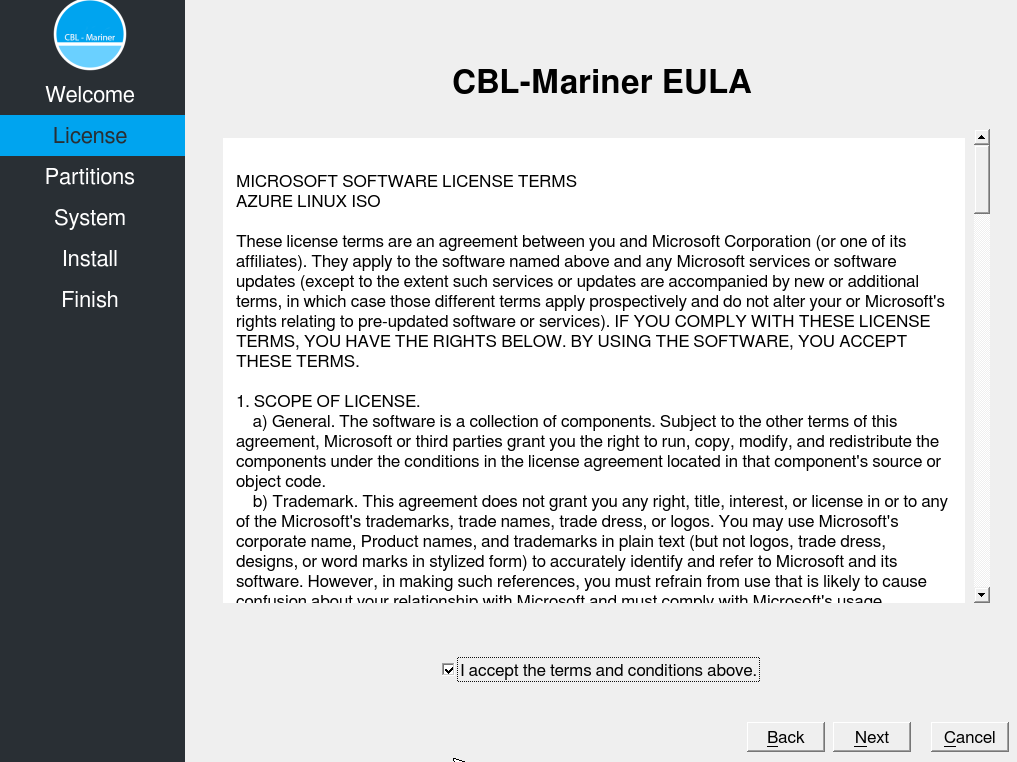
Read and Accept the CBL-Mariner Eula.

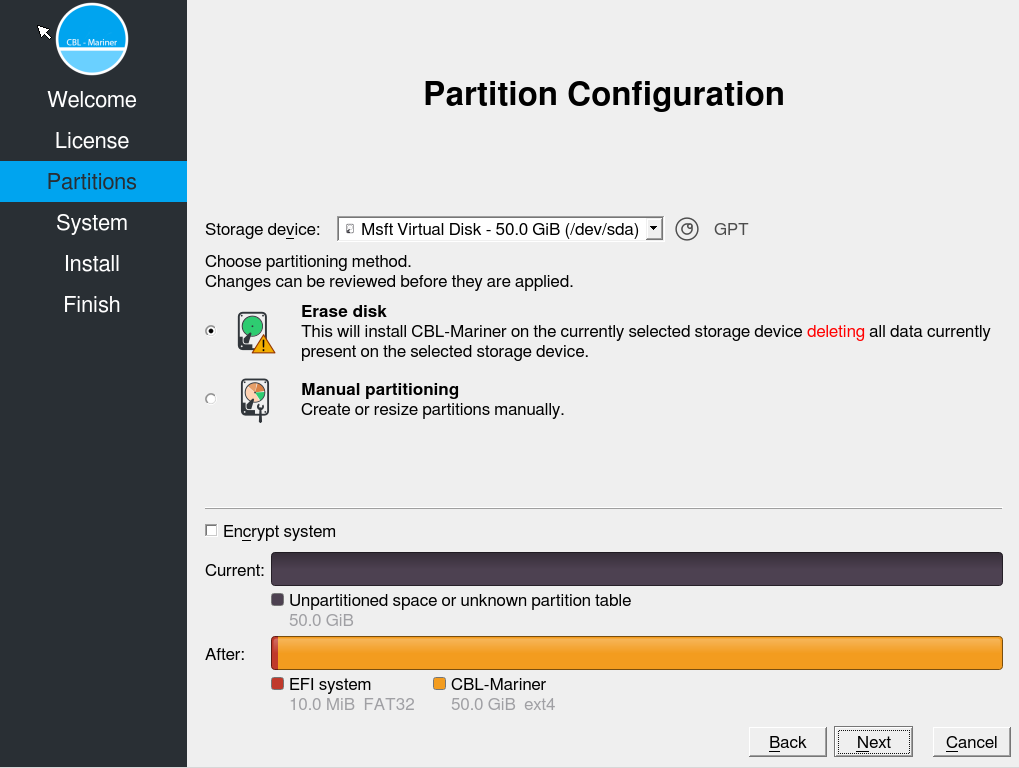
Here you can Partition your Storage.


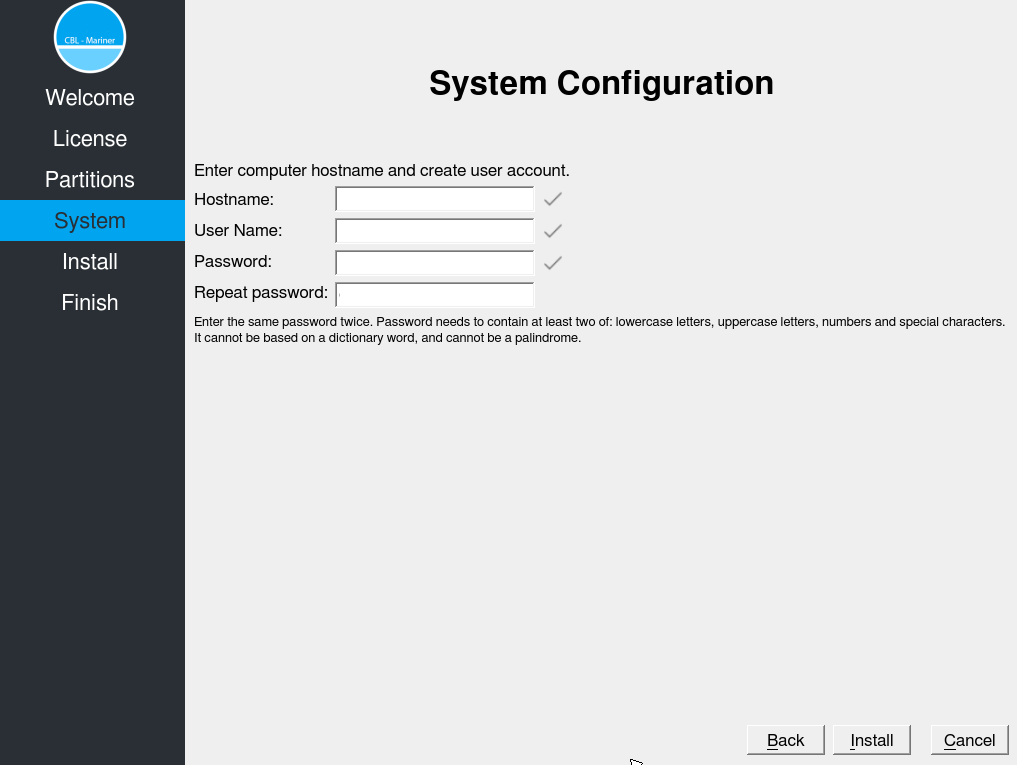
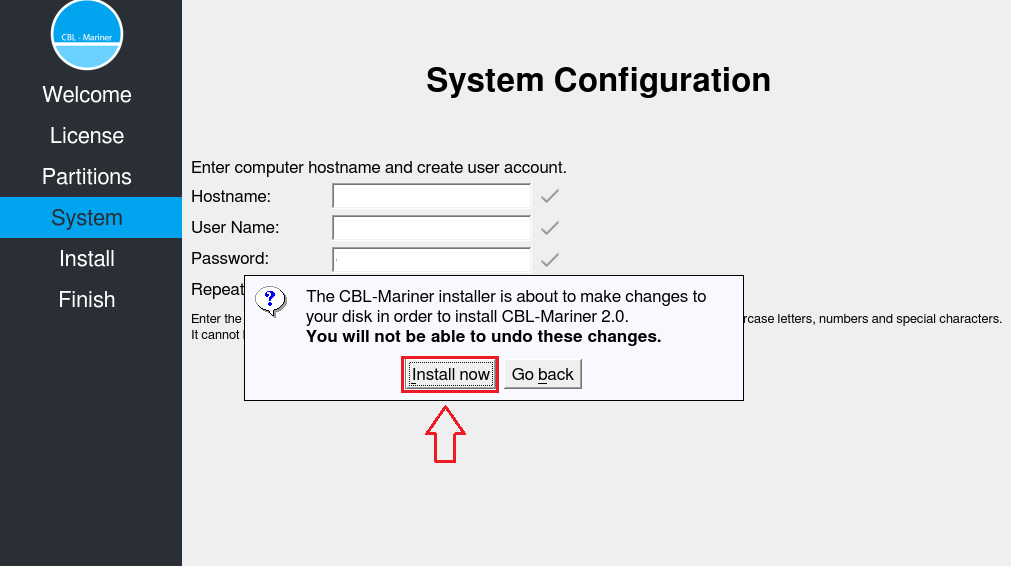
Enter the Computer hostname and Create a User account.

Install Now.

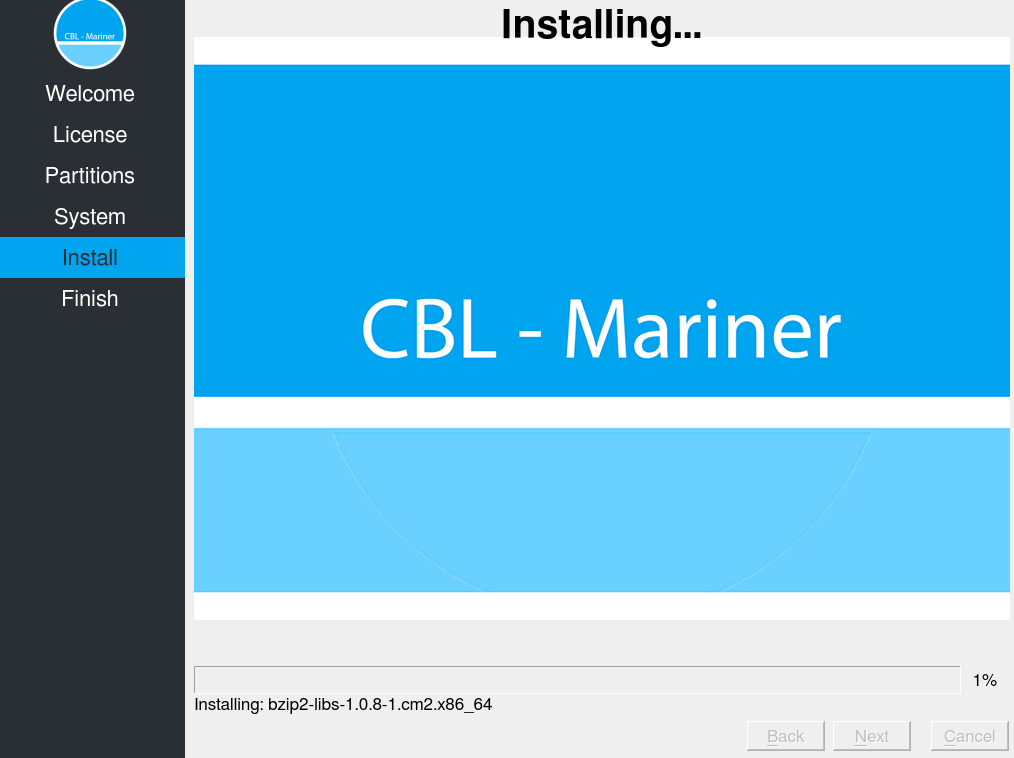
Installing CBL-Mariner 2.0 on the VM.

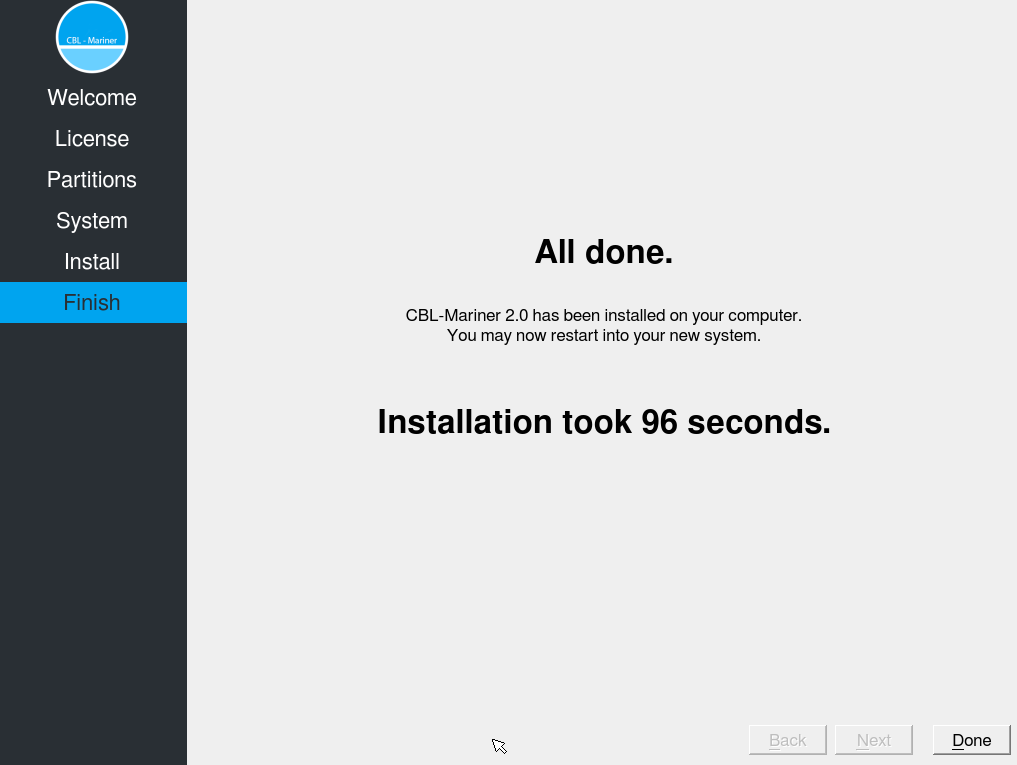
And yes It’s fast 😉

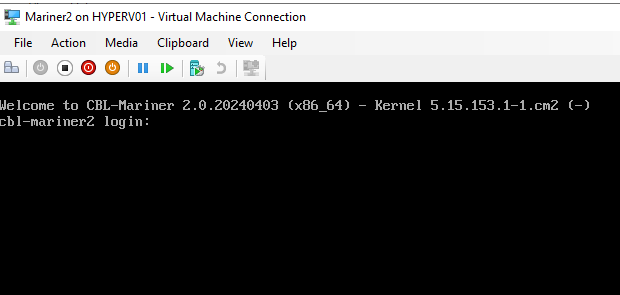
Login with your new created user account.

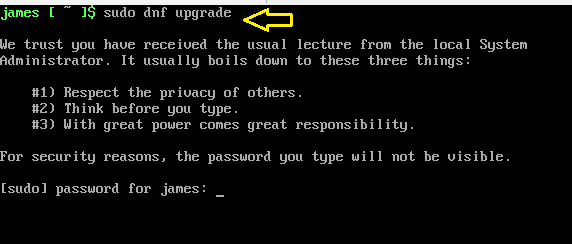
It’s a habbit of my to update always the OS before doing other installations, so in the next steps we are going to upgrade to the latest updates since the ISO is released. Then we are going to install Azure-CLI and Docker Host for Containers.

Type the Command: Sudo dnf upgrade

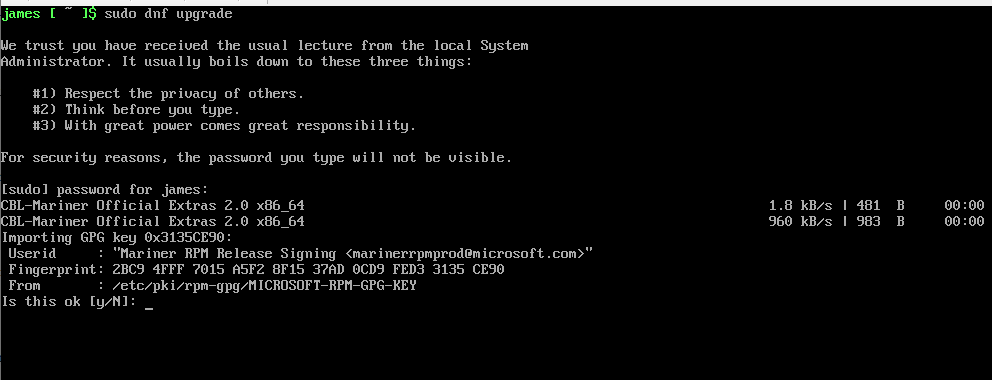
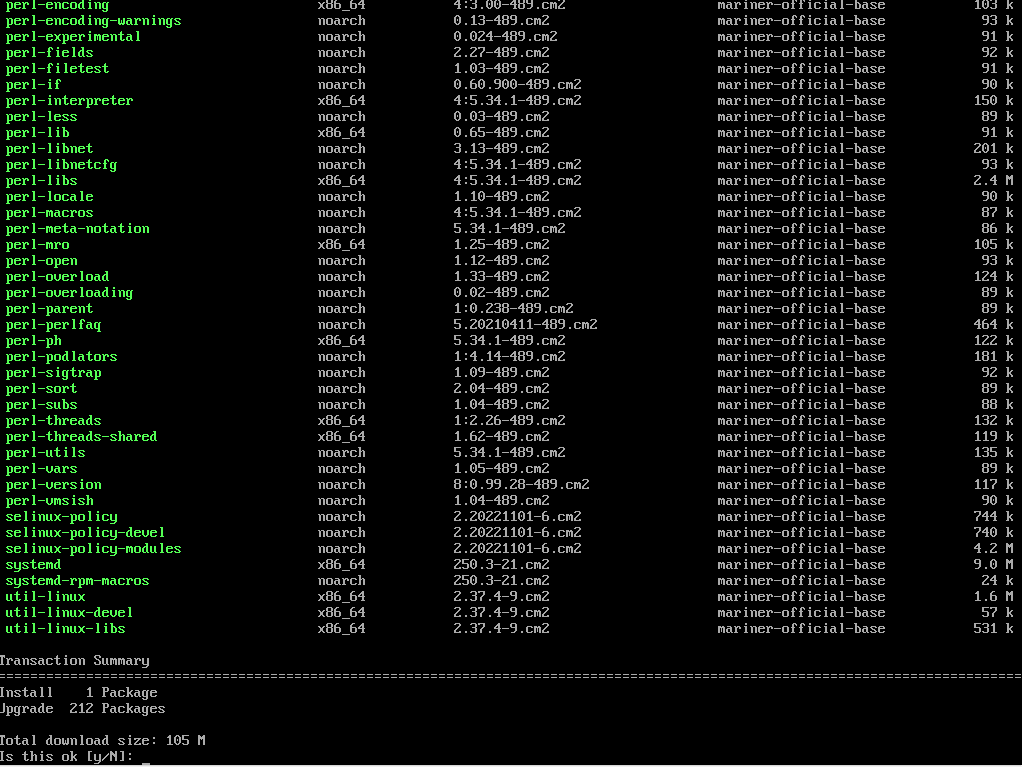
The OS is now asking a couple of times if it’s OK to install.

Installing of Packages to update the System.

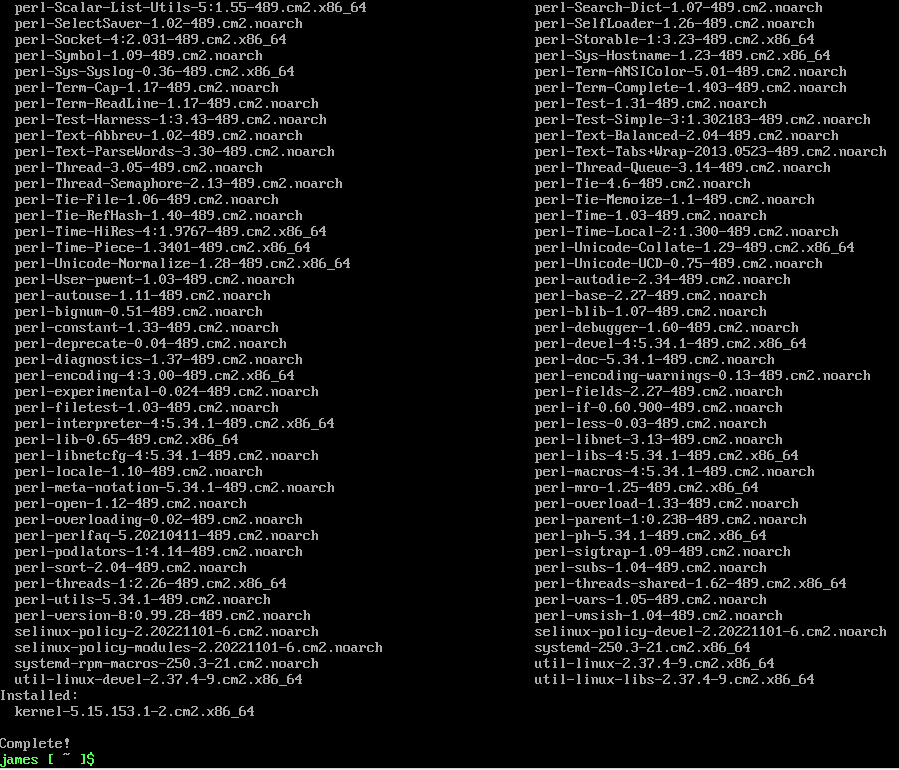
Upgrade of CBL-Mariner 2.0 is Completed.

Installing Microsoft Azure-CLI on CBL-Mariner 2.0

The Azure Command-Line Interface (CLI) is a cross-platform command-line tool to connect to Azure and execute administrative commands on Azure resources. It allows the execution of commands through a terminal using interactive command-line prompts or a script. Here you can find more about Microsoft Azure-CLI


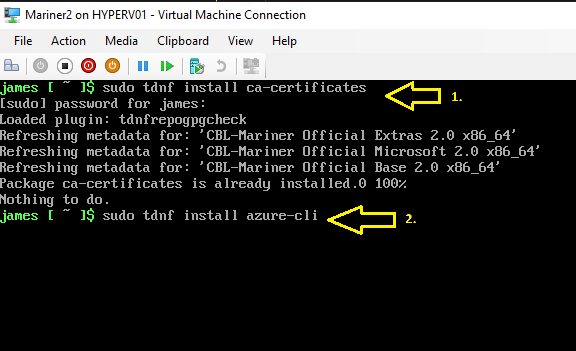
First, we install the ca-certificates
then
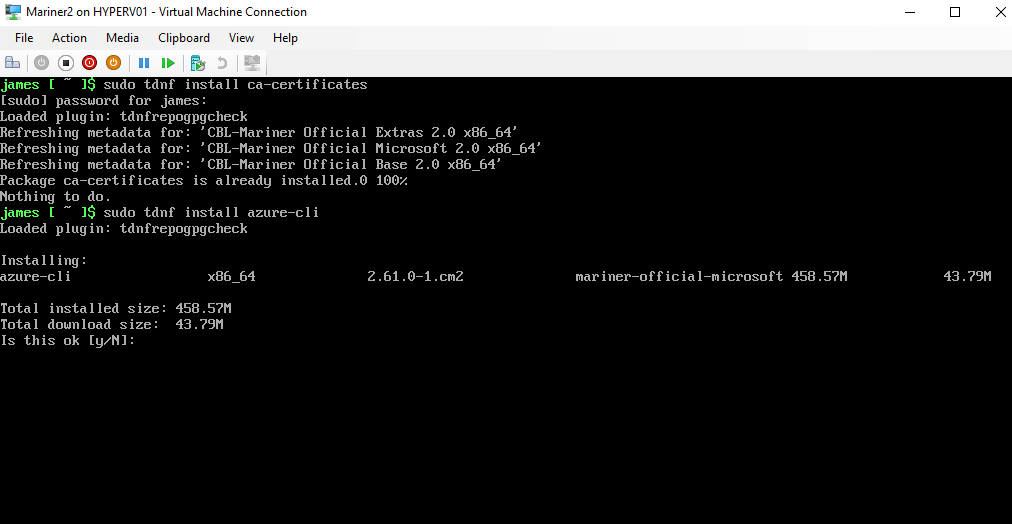
we install Microsoft Azure-CLI 

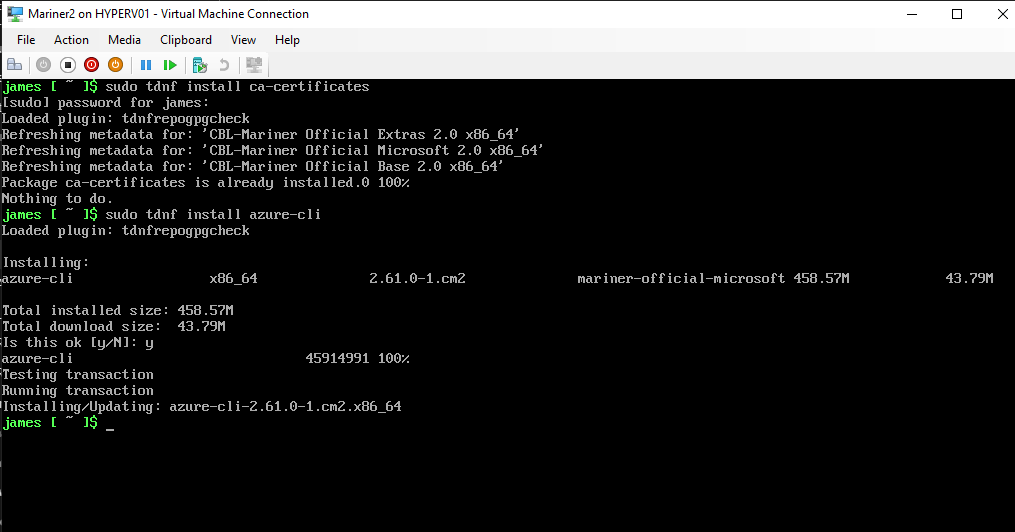
       type Y if this is OK.

Azure-CLI is installed.

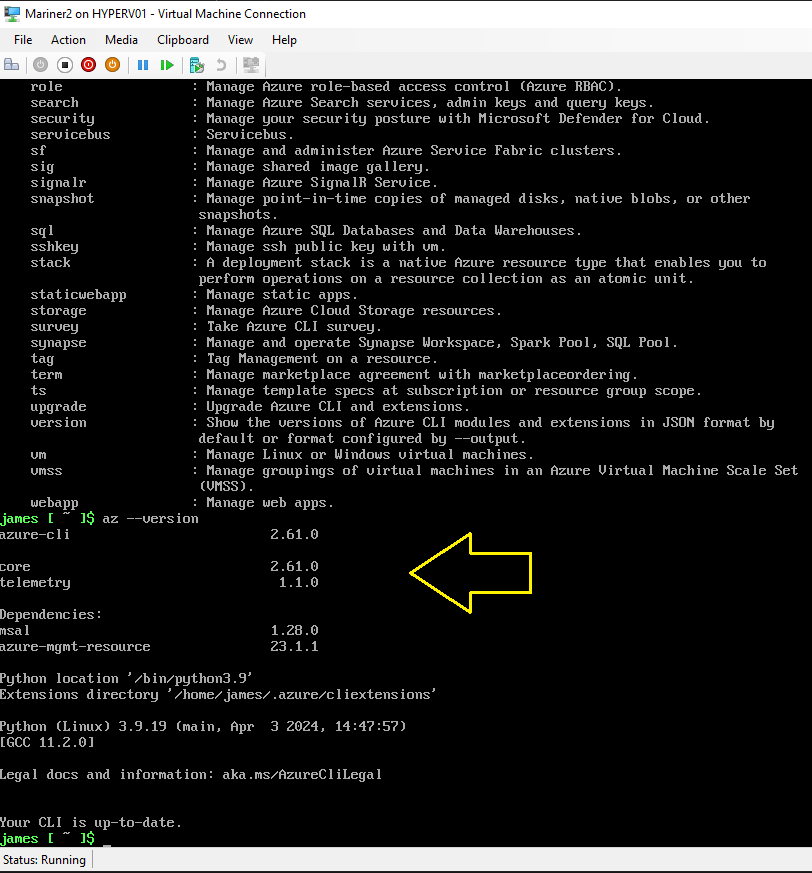
The Latest Microsoft Azure-CLI is running on your up-to-date CBL-Mariner VM.

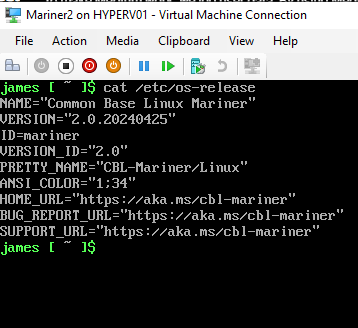
Type command: cat /etc/os-release
and you can see the exact version of CBL-Mariner 2.0

Installing Docker Container host on CBL-Mariner 2.0

Docker provides the ability to package and run an application in a loosely isolated environment called a container. The isolation and security lets you run many containers simultaneously on a given host. Containers are lightweight and contain everything needed to run the application, so you don’t need to rely on what’s installed on the host. You can share containers while you work, and be sure that everyone you share with gets the same container that works in the same way.

Docker provides tooling and a platform to manage the lifecycle of your containers:

  • Develop your application and its supporting components using containers.
  • The container becomes the unit for distributing and testing your application.
  • When you’re ready, deploy your application into your production environment, as a container or an orchestrated service. This works the same whether your production environment is a local data center, a cloud provider, or a hybrid of the two.

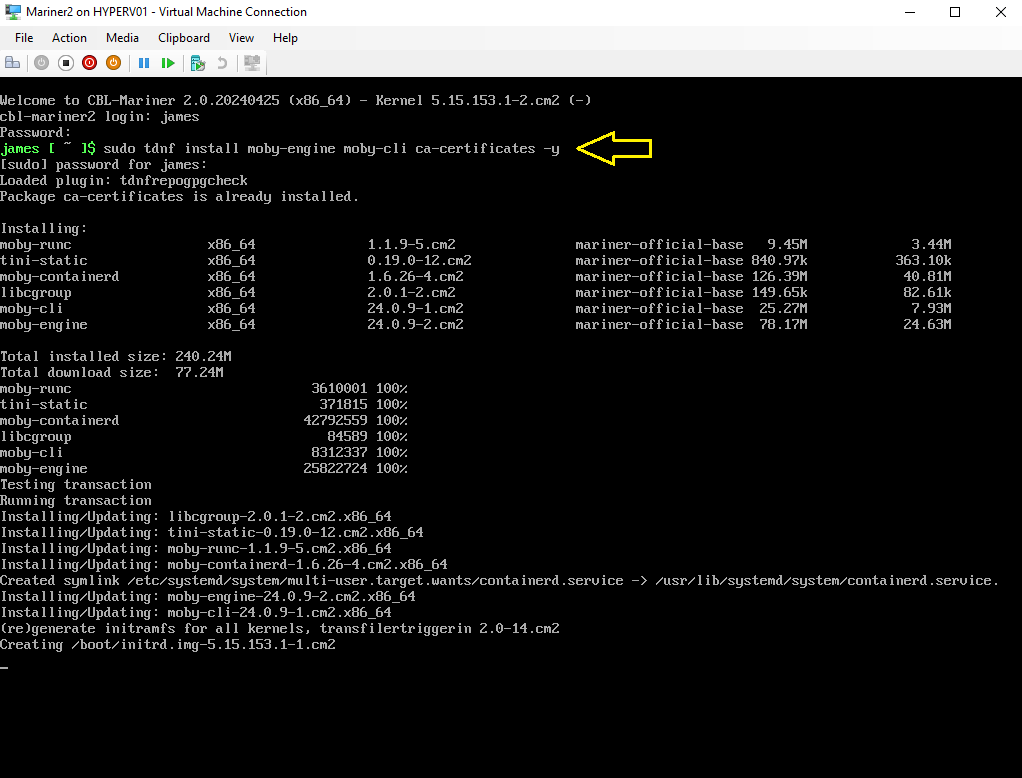
Now we are going to install the Docker Container host software on Microsoft CBL-Mariner 2.0 (Azure Linux):

Type Command: sudo tdnf install moby-engine moby-cli ca-certificates -y

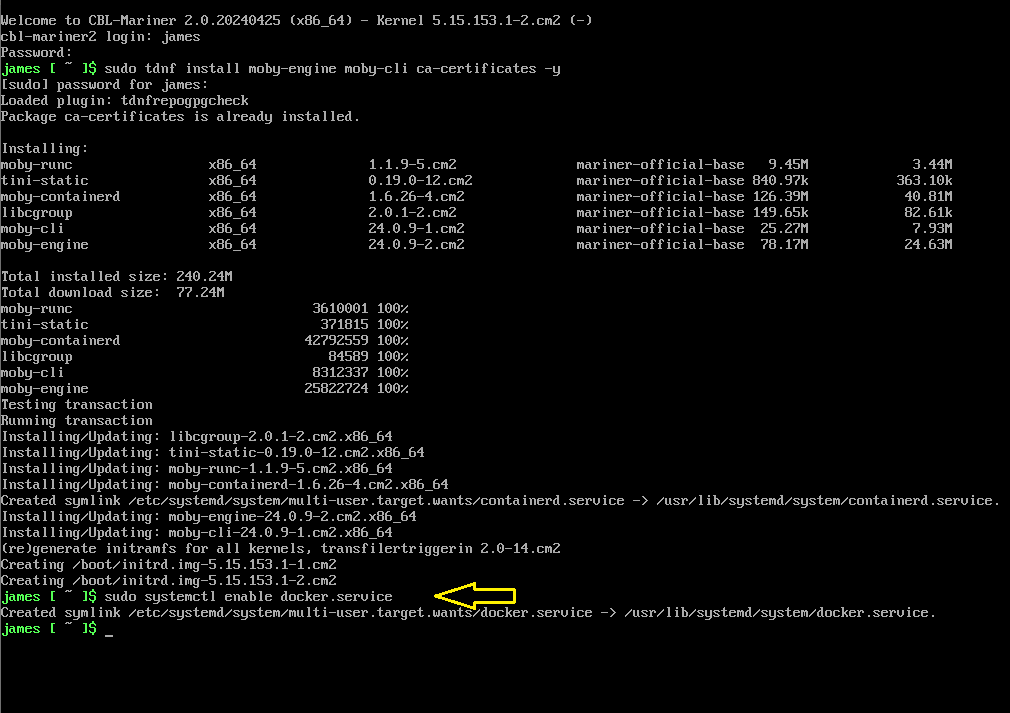
Type command: sudo systemctl enable docker.service

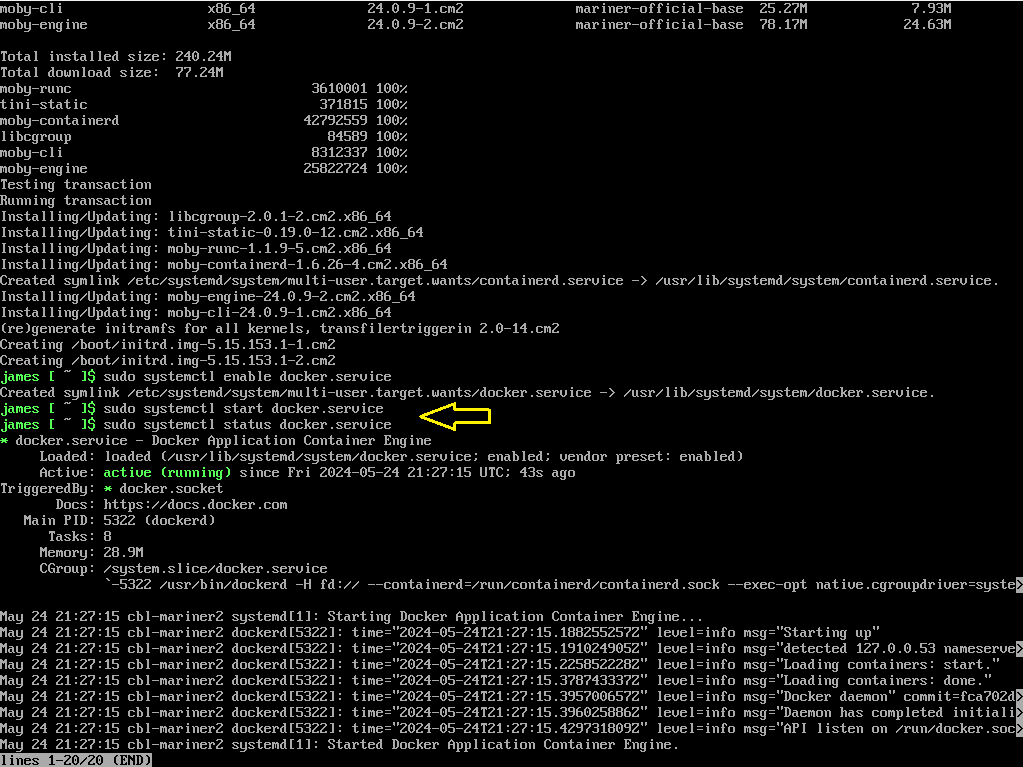
Type command: sudo systemctl start docker.service
and then
type command: sudo systemctl status docker.service

Now you can pull or create your containers from here for example:
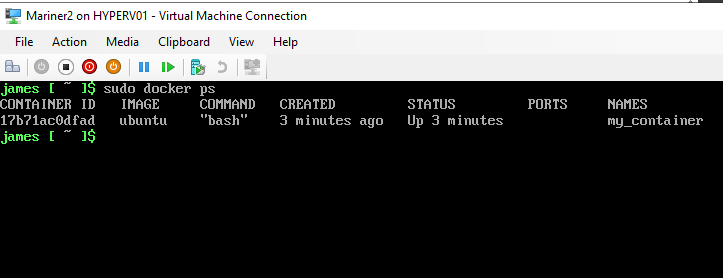
Type Command: docker run -it -d –name my_container ubuntu bash

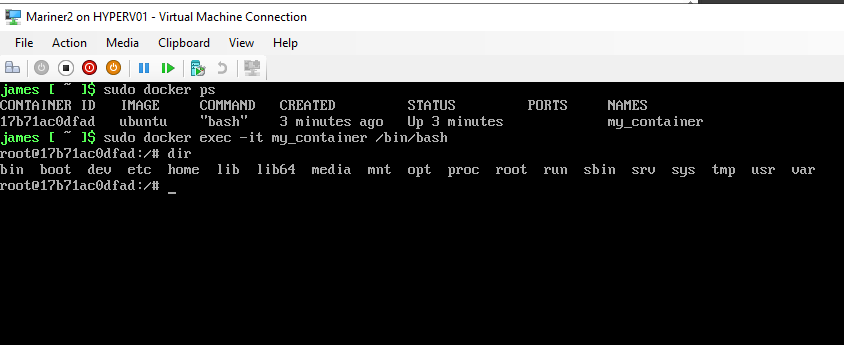
Here I’m inside the Ubuntu Linux Container running on CBL-Mariner 2.0 with Docker Container Host.

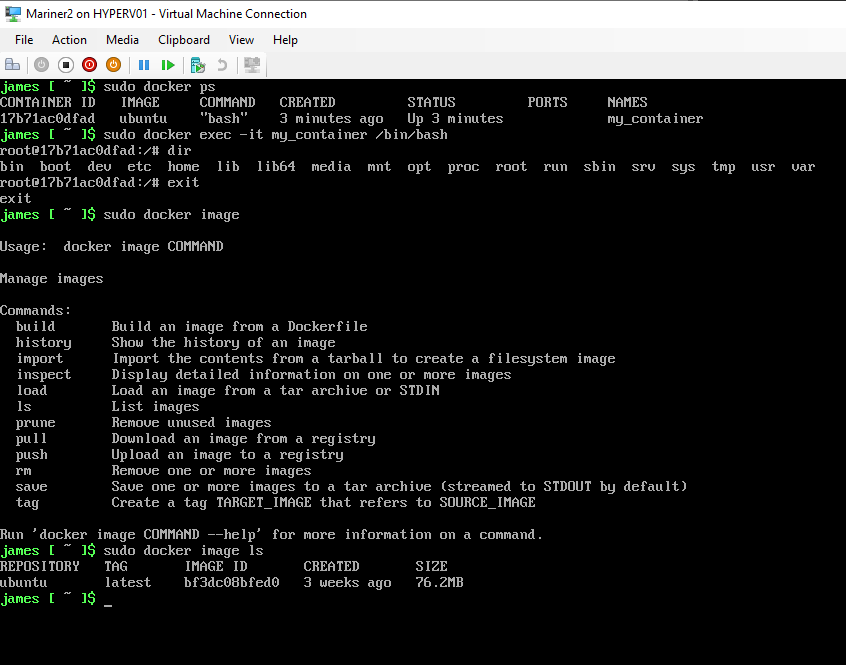
Docker Container Ubuntu image.

More information about Microsoft CBL-Mariner 2.0 you can find here:

Microsoft CBL-Mariner 2.0 (Azure Linux) on Github

Microsoft CBL-Mariner 2.0 (Azure Linux) Security

Microsoft CBL-Mariner 2.0 (Azure Linux) Toolkit docs

Conclusion

Running Microsoft CBL-Mariner 2.0 (Azure Linux) on Azure Stack HCI Hyper-V Cluster or in Microsoft Azure Cloud can be very powerfull as a lightweight Linux operating system at the Edge. Now we did running Docker Container Host on CBL-Mariner 2.0 (AzureLinux) but you can also install Microsoft Azure Arc agent to use this Operating System in a Adaptive Cloud way for Azure Hybrid Management and security. Try it yourself first in your test lab and when you have build a great security by design solution, use it in production for your business.

Join Containers in the Cloud LinkedIn Community Group for Free

Add Kubernetes Cluster to Microsoft Azure Arc #Containers #AzureHybrid

Microsoft Azure Arc Services for Adaptive Cloud

Azure Arc-enabled Kubernetes allows you to attach Kubernetes clusters running anywhere so that you can manage and configure them in Azure. By managing all of your Kubernetes resources in a single control plane, you can enable a more consistent development and operation experience to run cloud-native apps anywhere and on any Kubernetes platform.
Azure Arc-enabled Kubernetes works with any Cloud Native Computing Foundation (CNCF) certified Kubernetes clusters. This includes clusters running on other public cloud providers (such as GCP or AWS) and clusters running on your on-premises data center (such as VMware vSphere or Azure Stack HCI).

In the following step-by step installation, we are going to connect a Kubernetes Cluster with Azure Arc services.

Add Kubernetes Cluster

Before you begin, you need this prerequisites

Extension add

the Extension was already installed.

Here you set the subscription and resource group first.
Cluster name in Azure and the Microsoft Azure Region.
and at last, the network connectivity method, in my scenario a public endpoint.

you can add your tags.

Here you can select your script type Bash or PowerShell
Then download your script.

Azure login

Enter the code and login your Azure subscription.

You now have signed in.

Check these Provider registrations (requirement)

Running the bash script.

Starting to install Azure Arc agents on the Kubernetes Cluster.

In Azure Portal, Kubecluster is connected to Azure.

kubectl get pods -n azure-arc

Kubecluster Overview in Azure portal.

the kubecluster is Azure Arc enabled and running. 🙂

Azure Arc-enabled Kubernetes with Azure Monitor options.

Azure ArcNetworking extension for loadbalancer service.

Arc Enabled kubernetes Cluster features.
Azure provides an automated application deployments capability using GitOps 

Try your Azure Arc enabled Kubernetes Cluster Today first in your test lab and see all the features you can use for your environment.
Join Containers in the Cloud Community on Linkedin

Join Azure Hybrid Community on Linkedin

#Microsoft Windows Server Summit 2024 #Winserv #Hyperv #HybridIT

Don’t miss this Awesome Microsoft Windows Server Summit 2024 virtual event to get the latest and Greatest information powered by the Engineering team!

When: March 26-28, 2024. Mark your Calendar 😉

Topic wise: it will be wide ranging covering all the new goodness of Windows Server 2025, on-prem and Hybrid scenarios, Azure Arc, Identity, Virtualization, SMB updates and more! 
Here you can find more information: Windows Server Summit 2024

Get started Today with Windows Server 2025 Insider Preview Build in your test environment!

Keep your Azure Arc Server extensions up-to-date #AzureHybrid #HybridIT #Azure

Microsoft Azure Arc enabled Servers

When you have your Servers Azure Arc enabled, you will work with Azure Arc extensions to work with Azure hybrid features like Defender for Cloud, Azure Monitor, Windows Admin Center and more. For each Azure Arc extension you can get updates, and it’s important to keep them up-to-date for new functionality and security. You have Azure Arc extensions for Windows Servers but also for Linux Servers.
Some of the Azure Arc extensions will automatic upgrade when you have enabled it and some must go manually from the Azure Portal.
More information about Azure Arc extensions you can find them here

In the next steps you will see the Update management of the Azure Arc enabled extensions :

Here I update one extension.

Inside the WindowsOsUpdateExtension

Here you can see that the WindowsOsUpdateExtension is up-to-date
and Status Succeeded

On the right of this screenshot you see Automatic Upgrade and some extensions are enabled, but some are not supported.
That’s why it’s important to check these updates.

Here you can see in the Status that two Azure Arc extensions are updating

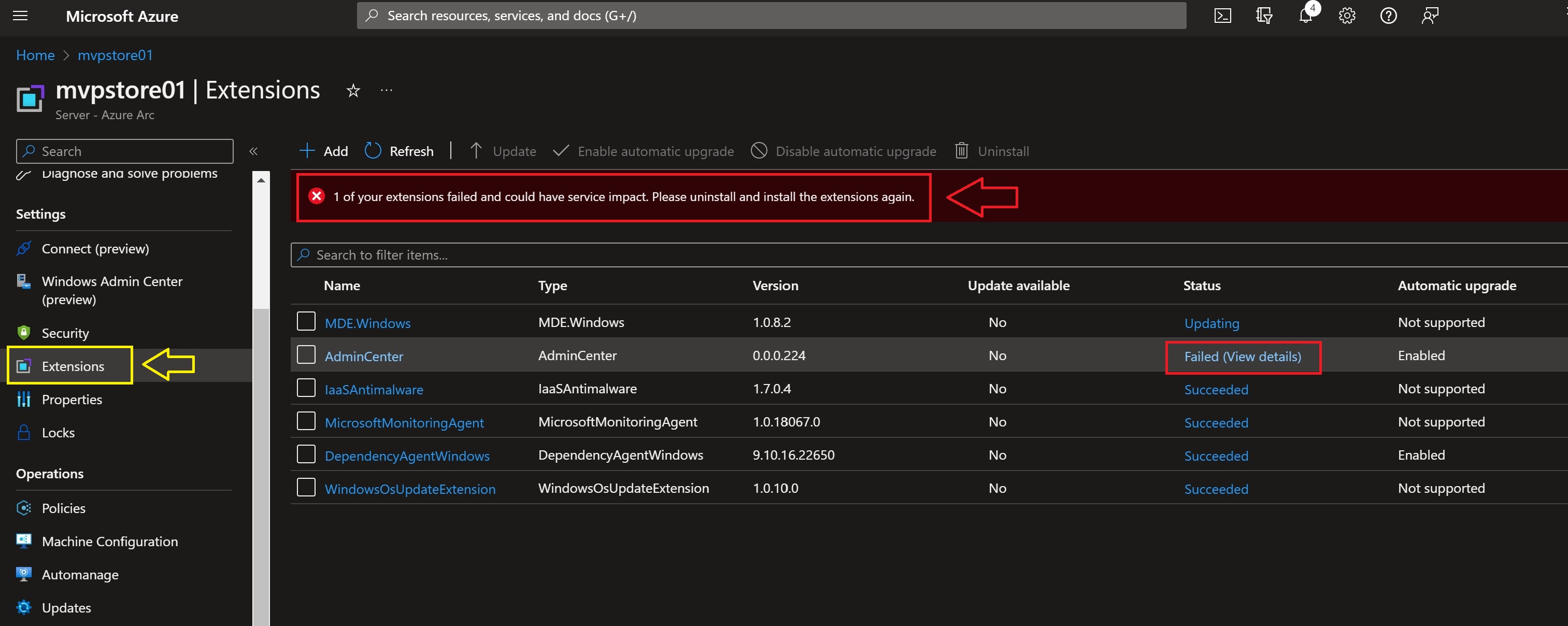
And sometimes it failed to update.
But you can see what you can do best with this failed Status.

Here you see the error message and the Tips.
And when you can’t fix it yourself you can make a Support ticket right away.

Here you can see that all the Azure Arc extensions are updated successfully

So I selected all my Azure Arc enabled Servers and updated them all.

Conclusion

With Microsoft Azure Arc enabled Servers you have do some IT management to keep your Azure Arc extensions up-to-date.
I did this without rebooting Servers, just from the Azure Portal update Azure Arc extension.
Here you find more information about Microsoft Azure Arc for Azure Hybrid IT

Join Azure Hybrid Community Group on LinkedIn

mountainss

Thank you #Community and #Microsoft for this Awesome Year 2022! Happy Holidays

What a Year 2022!!

I like to thank you Community for Supporting, Sharing and Reading New Microsoft technologies on my Blog, Twitter, Facebook and
LinkedIn Community Groups 💗 I wish you all happy Holidays, Merry Christmas and a Healthy New Year 2023 may the Best Wishes comes true ! 🎄🥂

I’m very proud and Honored  on the Microsoft Global MVP Awards 2022-2023 !

  • MVP Award for Cloud and Datacenter Management
  • MVP Award for Windows Insiders
  • MVP Award for Azure Hybrid

Thank you Microsoft Product Groups, MVP Award Program, Windows Insider Team, Azure Hybrid Team, Windows Server and Azure Stack HCI Team for all your support, NDA PGI sessions, and for the Awesome software, Features, solutions you are building 🙂
Wish you all Happy Holidays, Merry Christmas and a Healthy New Year 2023 may the Best Wishes comes true ! 🎄🥂

Here are some Great links for Reading and Sharing :

JOIN these LinkedIn Community Groups for free and Share New Microsoft Technologies Together:

Windows Admin Center Community Group

Containers in the Cloud Community Group

Microsoft Azure Monitor & Security for Hybrid IT Community Group

Azure Hybrid Community Group

Azure DevOps Community Group

What I really love is the Microsoft Tech Community platform


For Microsoft Azure Hybrid:

Azure Arc Jumpstart site

Azure Hybrid and Multi Cloud documentation

Microsoft Azure Arc Community monthly Meetup (GitHub)

Follow on Twitter for Azure Hybrid:

——————————————————————————————————————————————————-
For Windows Insiders:

Microsoft Windows Insiders Blog

Windows Insider Team on YouTube

The Windows Insider Program Team is really active on Twitter:
@WindowsInsider

@JenMsft

@NorthFaceHiker

@brandonleblanc

@amanda_lango


Get started with the Windows Server Insider program

What’s New in Windows Server 2022

Overview of Windows Admin Center

What’s New in SQL Server 2022


mountainss

#MVPLABSerie Azure Defender for Cloud with #AzureArc enabled SQL Server #AzureHybrid #Security

Azure Arc enabled SQL Servers Architecture

To keep your Business running, It’s important to secure and monitor your data. One of the security measures is doing Vulnerability assessments in your datacenter(s) to see the status and results for remediation. With Microsoft Azure Arc Defender for Cloud you can do a SQL Server vulnerability assessment in your on-premises datacenter or anywhere with the Azure Arc agent running.
Here you find more information about Azure Arc enabled SQL Server

Microsoft Defender for Cloud on Azure Arc enabled SQL Server

Here I activated Microsoft Defender for Cloud on Azure Arc enabled SQL Server, and Azure Defender for Cloud is doing a SQL vulnerability assessment to get the security status and results for remediation.

On this same Azure portal page you will see the Vulnerability assessment findings.

When you Open a Vulnerability finding, you get more information and the remediation for the issue.

Here you see the complete Resource Health of the Azure Arc enabled SQL Server.
Look at the Status of each severity.

Here you see all the vulnerability findings on these four databases.

When you do the remediation you will see the healthy status.
on the Passed tab.

Here I open only the OperationsManager database.
Now you see only the Vulnerability findings on this database.

Here you see a vulnerability finding on the SCOM database with the Remediation 🙂

You can make your Own Workbooks or use them from the Gallery.

Workbook example of Vulnerability Assessment findings.

Conclusion

With Azure Defender for Cloud vulnerability assessment and management you will learn a lot to set your Security Baseline on a higher level in your datacenter(s). Getting the right remediation of Microsoft to solve security issues is Great! You can do your assessments frequently to show your current status on demand. I Really like these Azure Hybrid Tools to make my work easier and the data more secure for the business.


Please join the Azure Hybrid Community Group on LinkedIn for free ( Sharing is Caring together )

mountainss

#MVPLABSerie Azure Arc enabled SQL Server Health Assessment #AzureHybrid #AzureArc #SQLServer

Azure Hybrid

In earlier MVPLABSerie blogpost I wrote about making your on-premises Servers hybrid with Azure Arc enabled Servers.
In my mvplab.local domain, there is a SQL 2022 Cluster running which also has the Azure Connected Machine Agent version 1.24.

One of the benefits of Azure Arc enabled Servers for SQL is that you can do on-demand SQL Health assessments on your SQL Environment in your On-premises Datacenter. In the following step-by-step guide we will prepare the SQL Cluster nodes.

Go to this link to watch the video

In my mvplab.local domain I’m doing the following steps :

Go in the Azure Portal to Azure Arc
Click on SQL Servers
under Infrastructure.
Click on Add

I Choose for Connect Servers
because both SQL Nodes are already connected in my MVPLAB.local domain.

Prerequisites
Click on Next Server details.

Select the right Azure Subscription and Resource Group
Select the region and Operating System
Set Proxy server URL
if you need one
Click on Next.

Set your owner tags if needed.
Here you can find more information about Tags Management

From here you have to download the Script
and Run it locally on both SQL Nodes. ( or your Single SQL Server )

Run the script in administrator modus of Powershell ISE.
go to page https://microsoft.com/devicelogin
and enter the Code

Login and continue.

Here you see that the Azure Connected Machine Agent already is installed.
But it will now add the SQL Extension.

Installation Completed Successfully.

Now we have two Azure Arc enabled SQL Servers connected.

Overview of SQL 2022 Node in Azure Arc.

You can see the Databases running.

Here you can set your Admin from Azure Active Directory.

But we want to do a SQL Assessment, but the Azure Monitoring Agent is still missing.

Here you see that the SQL extension is installed.
Now we will add the Azure Monitor Agent to my existing Log Analytics Workspace.
Click on Add

Select Log Analytics Agent – Azure Arc.

Add your Workspace ID
Add your Workspace Kay
Click on Review + Create

Validation Passed.

Azure Monitoring Agent is Installed.

From here you can do the On-Demand SQL Assessments via
Microsoft Azure Arc enabled SQL Servers.

The SQL Server Assessment focuses on several key pillars, including:

  • SQL Server configuration
  • Database design
  • Security
  • Performance
  • Always On
  • Cluster
  • Upgrade readiness
  • Error log analysis
  • Operational Excellence

Example of SQL Server Assessment results.

On each assessment result you get a recommendation from Microsoft so you can make your SQL environment Health and Secure!

Conclusion

To get these health results of your SQL environment is Awesome 🙂 You are in control of your Azure Hybrid Arc enabled SQL Servers to keep them Healthy and Secure. The following Azure Arc enabled SQL Server blogpost is about Azure Defender for Cloud for your SQL Servers. With these two Azure Arc for SQL Server features you get the best Insights to keep your data as save as possible.

mountainss

❌
❌